 Save
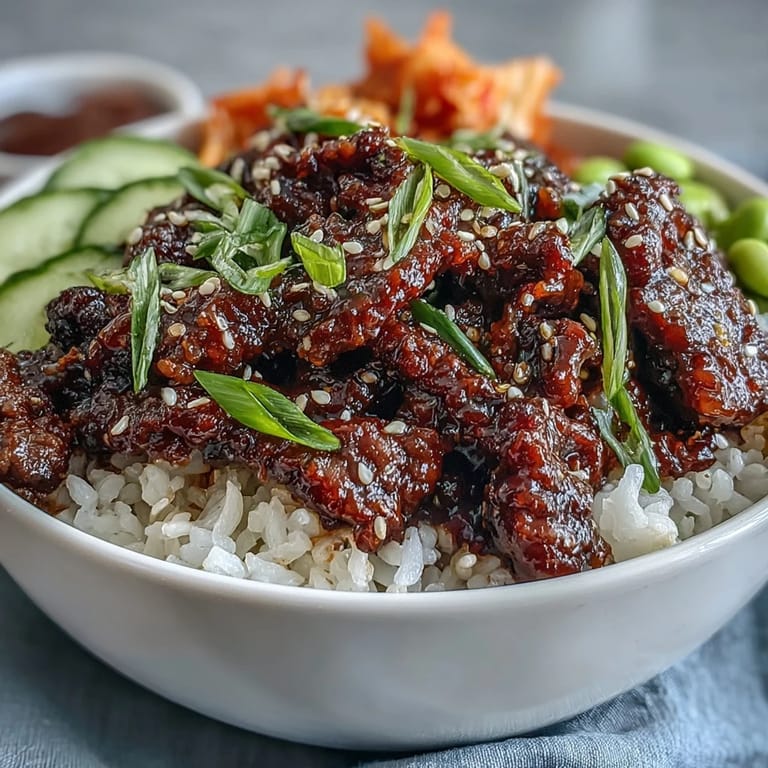
Save My friend Sarah handed me a bowl of this Korean beef rice mixture at a dinner party, and I remember being struck by how the gochujang hit differently when it was coating warm ground beef instead of sitting in a jar. The colors alone made me want to photograph it, but I was too busy eating. Within days, I'd bought gochujang and sesame oil, determined to recreate that moment in my own kitchen where things felt both exotic and oddly comforting.
I made this for my partner on a Tuesday when we'd both had the kind of day where conversation was minimal but good food seemed essential. He looked at the bowl skeptically until he tried it, then went back for seconds while I was still plating the first round. That's when I knew this recipe had staying power.
Ingredients
- Ground beef (1 lb): Lean beef works best here so you're not swimming in grease, and it browns more evenly when you break it up with intention rather than just stirring randomly.
- Gochujang (2 tbsp): This Korean chili paste is the whole personality of the dish, so don't substitute it with sriracha or hot sauce; it has this funky, fermented depth that makes everything else taste better.
- Soy sauce (2 tbsp): Use regular soy sauce unless you need gluten-free, in which case tamari works perfectly and tastes nearly identical.
- Brown sugar (1 tbsp): This rounds out the heat and salt with just enough sweetness to make you want another bite.
- Garlic and ginger (2 cloves and 1 tbsp): Mince them fine and fresh; jarred versions are fine in a pinch, but fresh makes you realize why these two have been paired in kitchens for centuries.
- Toasted sesame oil (1 tbsp): This is the aromatic anchor, so make sure it actually says toasted on the bottle or it'll taste flat and forgettable.
- Green onions (2 scallions): Keep some for the cooking and some for finishing; that final sprinkle adds freshness and a little sharp bite.
- Short-grain rice (4 cups cooked): White or brown both work, but short-grain rice holds the sauce better than long-grain because the grains cling to each other.
- Edamame (1 cup): Frozen and shelled is completely fine, and it adds protein and that satisfying pop when you bite into it.
- Cucumber (1 cup sliced): This provides cool crunch that contrasts with the warm, spiced beef, so don't skip it even if you think it sounds boring.
- Carrot (1 cup julienned): Thin matchsticks look prettier and cook slightly when they hit the warm rice and beef.
- Kimchi (1 cup): The funkiness here is non-negotiable; it's what makes this feel authentically Korean rather than just a bowl of stuff over rice.
- Toasted sesame seeds (2 tbsp): Toast them yourself if you have time and notice the difference, or buy them pre-toasted if you don't.
Tired of Takeout? 🥡
Get 10 meals you can make faster than delivery arrives. Seriously.
One email. No spam. Unsubscribe anytime.
Instructions
- Start with aromatics:
- Heat sesame oil in your skillet over medium heat, then add garlic and ginger and let them perfume the oil for exactly one minute. If you go longer, they'll start to brown and taste slightly bitter, which isn't the vibe we want.
- Brown the beef properly:
- Add your ground beef and let it sit untouched for about 30 seconds before you start breaking it up with your spatula. This helps it develop color rather than just turning gray, and it makes a real difference in flavor. Keep breaking it into small pieces until there's no pink left, about 5 to 6 minutes total.
- Build the sauce:
- Stir in gochujang, soy sauce, and brown sugar all at once, then let it bubble gently for 2 to 3 minutes. You'll watch the beef get coated in this glossy, deep-red sauce that smells impossibly good.
- Finish and rest:
- Pull the skillet off heat and stir in half the green onions, which will wilt slightly from the residual heat.
- Build your bowls:
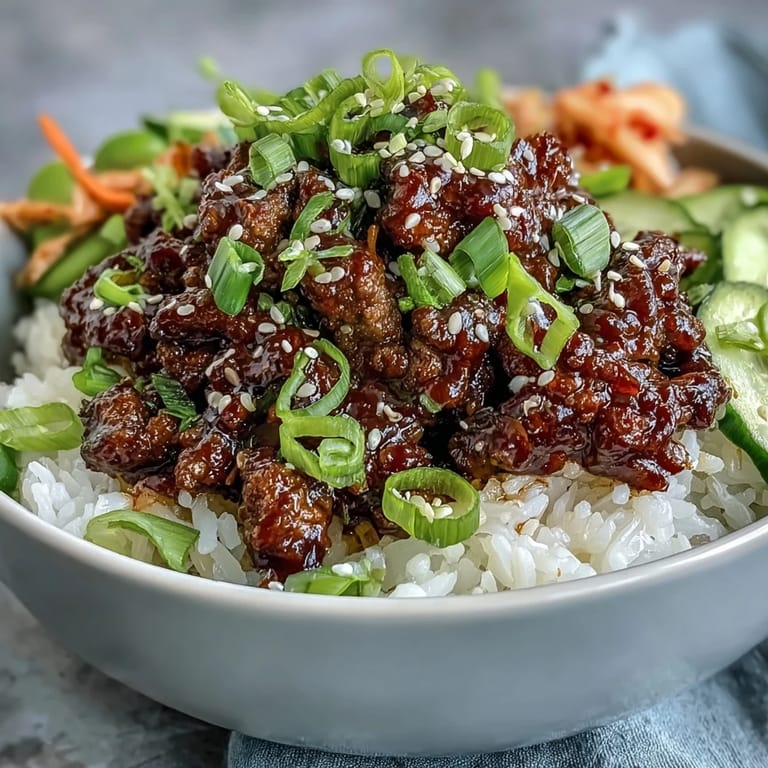
- Divide hot rice evenly among four bowls, then top each one with a generous scoop of the beef mixture. Arrange cucumber, carrot, and edamame around the beef however looks appealing to you.
- Garnish and serve:
- Scatter the remaining green onions and sesame seeds over everything, then serve right away while the rice is still steaming. This is important because the heat brings all the flavors together.
 Save
Save There's a moment when everyone's sitting down and digging in, and someone says something like I could eat this every week without getting tired of it, that's when you know you've made something honest. This bowl does that consistently.
Why This Works as a Weeknight Dinner
The whole thing depends on components you can prep ahead or buy ready-made, which means you're not chopping vegetables while your rice is getting cold. Most of these ingredients last forever in your pantry or fridge, so you can have this meal on the table on a random Wednesday without any special planning. It's the kind of dish that feels indulgent but doesn't require you to spend your evening cooking.
Playing with Heat and Flavor
Gochujang comes in different heat levels depending on the brand and where you buy it, so if you're spice-sensitive, start with a tablespoon and taste before committing to the full two. On the flip side, if you love heat, you can add a pinch of gochugaru or extra gochujang, or serve the whole thing with sriracha or a drizzle of hot oil on the side. The kimchi also brings its own spice, so account for that when you're calibrating your overall bowl temperature.
Building Your Perfect Bowl
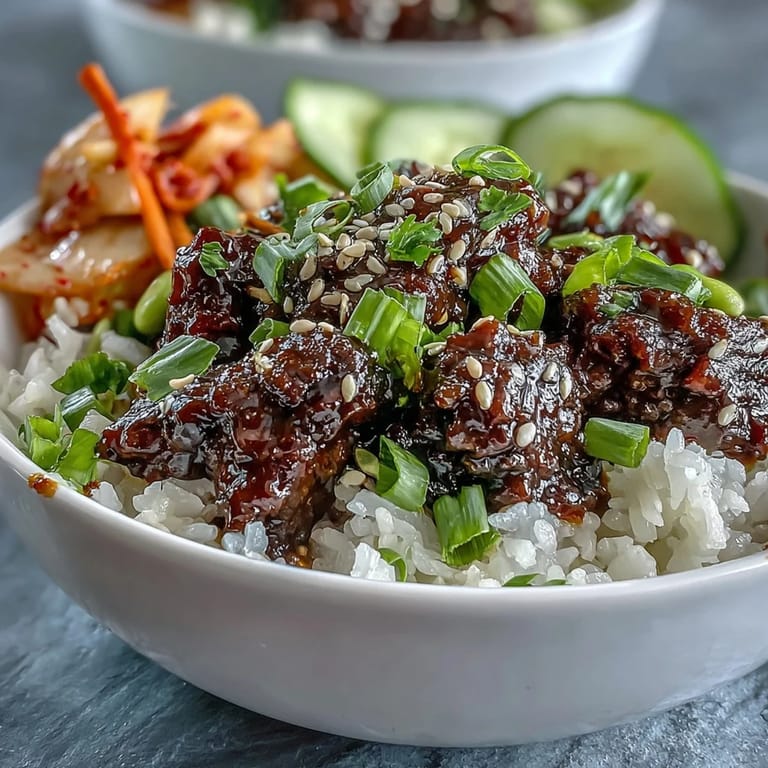
The beauty of this recipe is that it invites customization without falling apart, so feel free to swap in what you have or what you're in the mood for. Some people add a fried egg on top because the runny yolk becomes an extra sauce, while others throw in shredded cabbage, sliced radish, or cooked mushrooms. You could replace the beef with ground turkey for something lighter, or use crumbled tofu if you're cooking for vegetarians, and the whole thing still tastes balanced and satisfying.
- A soft or medium fried egg on top adds richness and becomes its own sauce as the yolk breaks.
- Extra gochujang on the side lets everyone control their own heat level without compromising the whole bowl.
- Leftover cooked rice and beef actually reheat beautifully, so make extra if you know you want lunch the next day.
 Save
Save This bowl has become the thing I make when I want to feel like I'm cooking real food but don't have hours to spend doing it. It's taught me that satisfying doesn't have to mean complicated.
Recipe FAQs
- → What is gochujang and where can I buy it?
Gochujang is a Korean chili paste made from fermented soybeans, red chili powder, and glutinous rice. It adds sweet, spicy, and umami notes. Find it in Asian grocery stores, international aisles, or online retailers.
- → Can I make this dish spicier or milder?
Absolutely. Increase gochujang for more heat or reduce it for a milder version. You can also add sriracha or Korean chili flakes for extra spice.
- → What other proteins work well in this bowl?
Ground turkey, chicken, or plant-based crumbles make excellent substitutes. Cooking times remain similar, though leaner meats may need a splash of oil to prevent sticking.
- → How long does cooked ground beef keep in the refrigerator?
Store cooked beef in an airtight container for up to 4 days. Reheat gently in a skillet or microwave, adding a splash of water if needed to refresh the sauce.
- → Can I prepare components in advance?
Yes. Cook rice and vegetables up to 2 days ahead. The beef mixture can be made 1 day in advance and reheated. Assemble bowls just before serving for best texture.