 Save
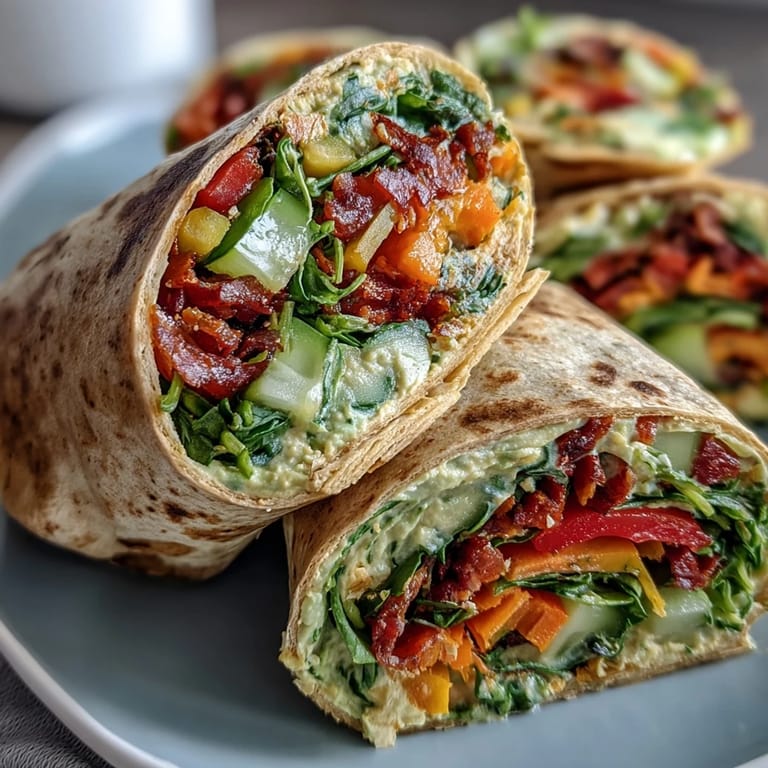
Save My daughter came home from school one afternoon with that particular hunger that only a field trip can create, asking if I could pack her something colorful for the next day's adventure to the botanical gardens. I stood at the kitchen counter thinking about how to make something that wouldn't get soggy in her lunchbox, wouldn't stain her clothes, and might actually excite her more than the usual sandwich. That's when these rainbow wraps were born, and honestly, they became such a hit that her friends started requesting them too.
I'll never forget watching my daughter open that lunchbox in the school parking lot when I picked her up, showing me how she'd carefully unwrapped the parchment paper and how the colors looked almost like stained glass when the sun hit it through the car window. She told me her friend Maya had traded three things from her own lunch just to try a bite, which made me realize this wasn't just convenient food, it was actually special.
Ingredients
- Large whole wheat tortillas: Four sturdy ones form the base, and whole wheat adds actual nutrition rather than just being a vehicle for filling.
- Hummus: Four tablespoons spread thin keeps everything from sliding around while adding creaminess and protein without heaviness.
- Red bell pepper: Thinly sliced, one medium pepper contributes natural sweetness and that satisfying crunch that stays crisp all morning.
- Yellow bell pepper: Another medium one adds brightness and a slightly different flavor note than the red, making each bite interesting.
- Carrot: Peeled and julienned, it brings earthy sweetness and stays firm no matter how long it sits in a lunchbox.
- Cucumber: One small one, julienned, keeps things refreshing and hydrating without becoming watery if you pat it dry first.
- Purple cabbage: One cup shredded gives you that purple stripe that makes the whole thing feel intentional, plus it's incredibly sturdy.
- Baby spinach leaves: One cup adds iron and nutrition so quietly you barely taste it, which is the whole point with kids.
- Fresh parsley or cilantro: Optional quarter cup chopped, but honestly it makes the whole thing taste more like something you chose rather than just assembled.
- Avocado: One sliced and optional, adds creaminess and richness if you're feeding someone feeling fancy that day.
- Crumbled feta cheese: Four tablespoons optional, brings a salty sophistication that makes this feel less like a lunchbox and more like an intentional meal.
Tired of Takeout? 🥡
Get 10 meals you can make faster than delivery arrives. Seriously.
One email. No spam. Unsubscribe anytime.
Instructions
- Prepare your workspace:
- Lay your tortilla flat on a cutting board or clean counter and you'll immediately see how much space you're actually working with.
- Spread the hummus:
- Using the back of a spoon, swirl one tablespoon evenly across the tortilla, leaving maybe a quarter inch border so nothing squeezes out when you roll. This thin layer is the key to keeping everything in place without making it heavy.
- Create your rainbow:
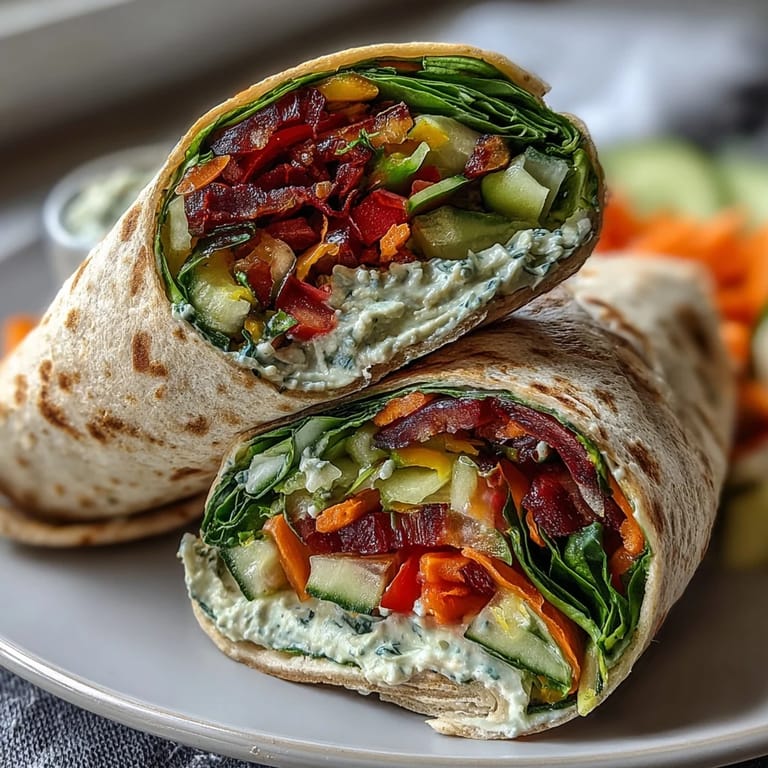
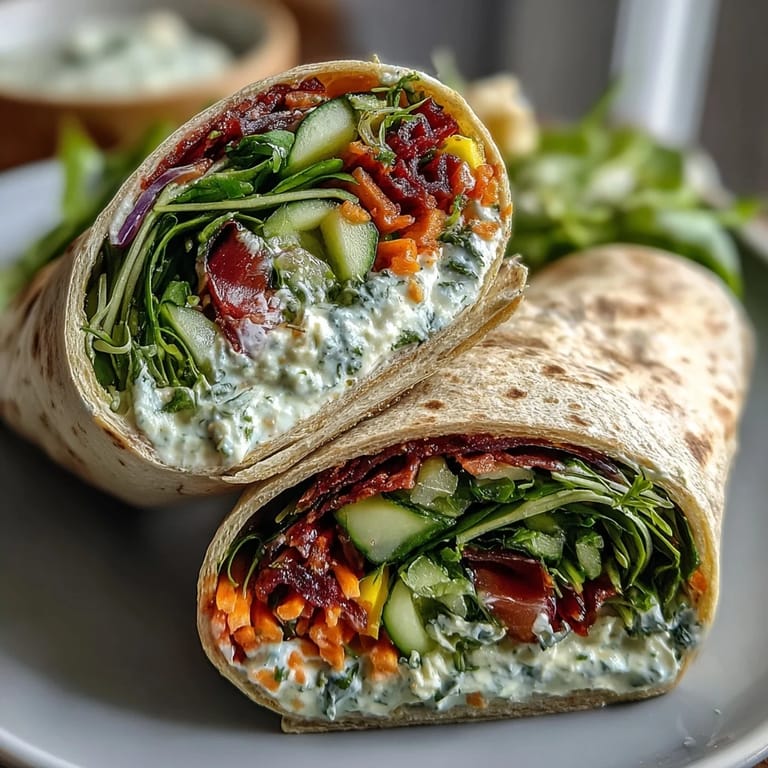
- Arrange your vegetables in horizontal lines across the center, starting with red pepper, then yellow, then carrot, then cucumber, then cabbage, then spinach. The visual order matters because it's what makes people actually want to eat it.
- Add the finishing touches:
- Sprinkle herbs, avocado slivers, and feta if you're using them, keeping everything toward the center where it won't fall out during rolling.
- Roll with intention:
- Fold the left and right sides inward first, creating a seal, then roll tightly from the bottom up using steady pressure. You want it snug but not so tight that the tortilla tears.
- Slice and wrap:
- Cut each wrap diagonally with a sharp knife, then wrap each half in parchment paper twisted at the ends like a piece of candy. This makes it easy to grab and keeps everything from shifting in the lunchbox.
 Save
Save There was something unexpectedly moving about realizing that something I'd made in my kitchen had become part of my daughter's social life, that it had created a small moment of connection with another kid at school. Food has this quiet power to do that, to slip past all the barriers and just become something people want to share.
The Psychology of Color on a Plate
When you arrange vegetables by color rather than throwing them all together, something shifts in how people perceive the meal. It's not just more nutritious, though it is, but it looks intentional and special. My younger son actually started volunteering to help make these because he wanted to be part of creating something that looked like art.
Timing and Storage Secrets
These wraps are best assembled no more than a few hours before eating, which means you can make them the night before but should wait to wrap them until morning if you want maximum crispness. I learned to keep the vegetables in separate containers overnight and assemble them fresh, which takes maybe five extra minutes but makes all the difference in texture.
Endless Variations That Still Feel Right
The beautiful part about this formula is that you can swap almost any vegetable and it stays balanced, so you're never locked into one version. I've made winter versions with roasted beets and Brussels sprouts, spring versions with asparagus and fresh peas, and they all work because the principle stays the same. My nephew is allergic to sesame so can't have traditional hummus, but we discovered that a thin spread of cream cheese works perfectly and keeps the whole thing just as special.
- Try roasted vegetables in cooler months for a heartier version that still packs well.
- Swap the hummus for mashed white beans if you want something lighter or have different dietary needs.
- Pack a small container of your favorite dressing on the side for dunking if your group likes things wetter and more intentional about condiments.
 Save
Save These wraps have become my go-to move for any situation where I need food that's easy, nourishing, and feels like I actually tried. They're proof that sometimes the best meals aren't the complicated ones.
Recipe FAQs
- → What vegetables are best for these wraps?
Bell peppers, carrots, cucumber, purple cabbage, and spinach provide vibrant color and crunch, making them excellent choices.
- → Can I use gluten-free tortillas?
Absolutely, gluten-free tortillas work well and keep this option suitable for gluten sensitivities.
- → What are good spread alternatives to hummus?
Cream cheese or dairy-free spreads can be used to add moisture and flavor as alternatives to hummus.
- → How can I add protein to these wraps?
Incorporate grilled chicken, tofu, or crumbled feta cheese to boost the protein content.
- → What’s the best way to keep wraps fresh for lunch?
Wrap them tightly in parchment paper or foil and store them in a cool container to maintain freshness and prevent sogginess.