 Save
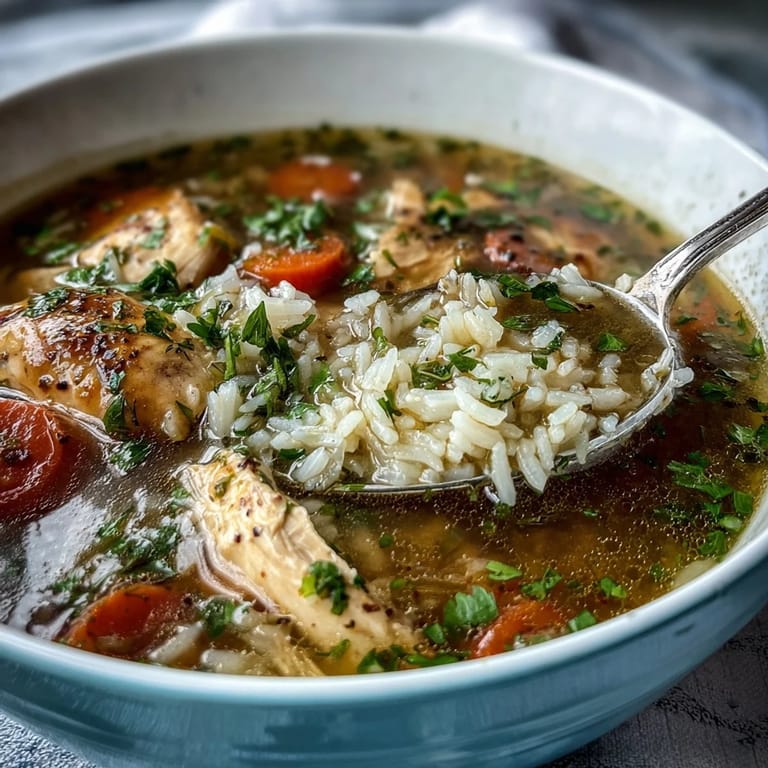
Save There's something about a one-pot soup that feels like a small victory, especially on those afternoons when the kitchen needs to be both the cooking space and the cleanup zone. My neighbor mentioned this chicken and rice soup one Thursday evening, describing how her kids actually asked for seconds, and I was intrigued enough to try it that weekend. What started as a quick weeknight experiment became the kind of recipe I make without thinking, the way some people make toast. The steam rising from that single pot, the way everything comes together without fuss or drama, it's become my default answer when someone asks what's for dinner.
I made this for my partner when he was recovering from being under the weather, and watching him actually eat something warm and substantial with real appetite felt like the soup had done its job twice over. He asked if I'd use more garlic next time, which led to me tasting as I cooked and realizing I had been too timid with the seasonings all along. That small adjustment, that conversation over a bowl of soup, is when I knew this recipe had staying power in our kitchen.
Ingredients
- Boneless, skinless chicken breasts: Cutting them into bite-sized pieces means they cook faster and distribute throughout the pot so every spoonful has some protein.
- Onion, carrots, and celery: This trio is the backbone of soup for a reason, and sautéing them first builds a flavor foundation you can actually taste in the finished bowl.
- Garlic: Add it after the vegetables soften so it doesn't burn and turn bitter, which I learned the hard way with an earlier version.
- Long-grain white rice: Rinse it before using to remove excess starch, otherwise your soup gets starchy and gluey instead of clean and light.
- Low-sodium chicken broth: Using six cups lets the rice and chicken flavor shine without overpowering salt that you can't take back.
- Olive oil or unsalted butter: Start with whichever you have on hand; the oil keeps it dairy-free if that matters to you.
- Thyme and bay leaf: These dried herbs are workhorses that season without needing fresh herbs wilting in your fridge.
- Salt and pepper: Taste as you go because every broth brand is different, and you're the expert on your own palate.
- Fresh parsley: Stirred in at the end, it adds a bright note that makes the whole bowl feel less plain.
Tired of Takeout? 🥡
Get 10 meals you can make faster than delivery arrives. Seriously.
One email. No spam. Unsubscribe anytime.
Instructions
- Sauté your aromatics:
- Heat oil in a large pot over medium heat and add onion, carrots, and celery, stirring for about five minutes until they start to soften and smell amazing. This is the moment when your kitchen stops feeling empty.
- Wake up the garlic:
- Add minced garlic and let it cook for just one minute, listening for the sizzle to quiet down, which means the raw edge is gone. Breathe in because this is the smell that makes people ask what's for dinner.
- Brown the chicken slightly:
- Stir the chicken pieces into the pot and let them cook for two to three minutes until the outside loses its raw pink color, though the inside will finish cooking in the broth. Don't stress about perfect browning; you're just sealing in flavor, not making a pan-seared masterpiece.
- Build your soup:
- Add the rinsed rice, broth, thyme, bay leaf, salt, and pepper, stirring everything together so the rice isn't clumping at the bottom. The pot should smell like home right now.
- Simmer until tender:
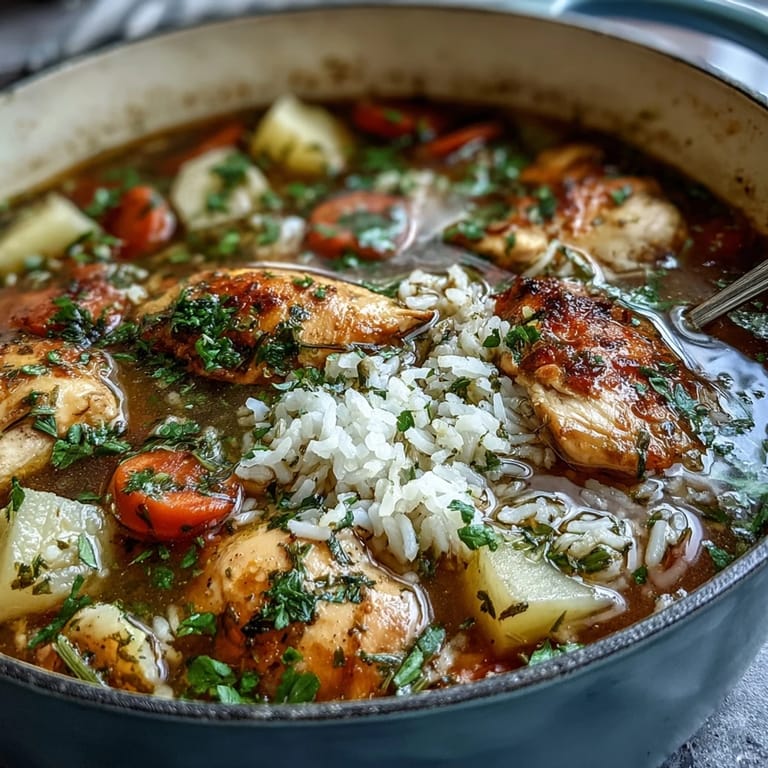
- Bring the pot to a boil, then drop the heat to a gentle simmer, cover it, and let it cook for twenty to twenty-five minutes, stirring occasionally so nothing sticks. The rice should be tender and the chicken cooked through, with the broth slightly reduced but still soupy.
- Finish and taste:
- Fish out the bay leaf, take a spoon, and really taste it, adjusting salt and pepper because this is your dinner. Stir in the fresh parsley just before serving so it stays bright green.
 Save
Save My kid once called this soup 'the quiet dinner' because everyone stops talking and just eats, and somehow that became the highest compliment our kitchen has ever received. That's when I understood this wasn't just efficient; it was actually nourishing in ways that go beyond the nutrition facts.
When You Want to Add Depth
A Parmesan rind simmered in the broth transforms this from simple to something that tastes like you spent hours on it, which is the kind of sneaky move that costs almost nothing. Drop it in before simmering and fish it out at the end, and your guests will wonder if you've been secretly taking cooking classes.
Making It Your Own
Fresh spinach or kale stirred in during the last five minutes adds color and nutrition without needing extra cooking time, and honestly, nobody has ever complained about more vegetables in their soup. Lemon wedges squeezed over the top right before eating brighten everything up and give the broth a subtle lift that makes people say 'wow, what is that flavor?'
Storage and Leftovers
The rice keeps absorbing liquid as the soup sits, so by the next day it's thicker and more stew-like, which is actually perfect if you're in the mood for something heartier. Cold soup isn't the goal here, but gently reheating with a splash of extra broth brings it right back to that perfect consistency you had at dinner.
- Store leftovers in an airtight container and they'll keep for three days in the refrigerator without tasting like sad leftovers.
- Freeze in portions and reheat gently on the stove rather than blasting it in the microwave, which dries out the chicken.
- Make a double batch on Sunday and you've just solved lunch for half the week with almost no extra effort.
 Save
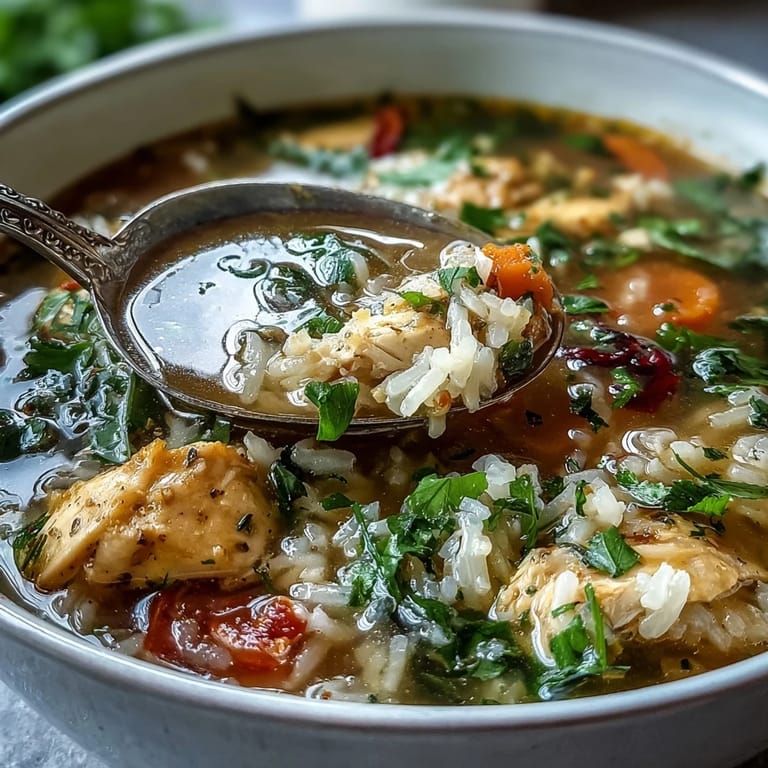
Save This soup lives in my kitchen now as the answer to nearly every question about what to eat, and that's exactly how a recipe earns its place. Make it once and it becomes the thing you know how to make without a recipe, which is when cooking stops being work and becomes just how you feed the people you care about.
Recipe FAQs
- → Can I use brown rice instead of white rice?
Yes, brown rice can be used but will require an additional 15–20 minutes of simmering for tenderness.
- → What can I add for extra greens?
Spinach or kale can be stirred in during the last 5 minutes of cooking for added color and nutrients.
- → How to prevent the soup from thickening too much when reheated?
Adding extra broth or water during reheating helps maintain the desired consistency as rice absorbs liquid over time.
- → Is it possible to make this soup dairy-free?
Yes, using olive oil instead of butter keeps the soup dairy-free while still providing rich flavor.
- → Can I enhance the flavor with cheese?
Adding a Parmesan rind while simmering infuses a deeper savory taste; remove before serving.