 Save
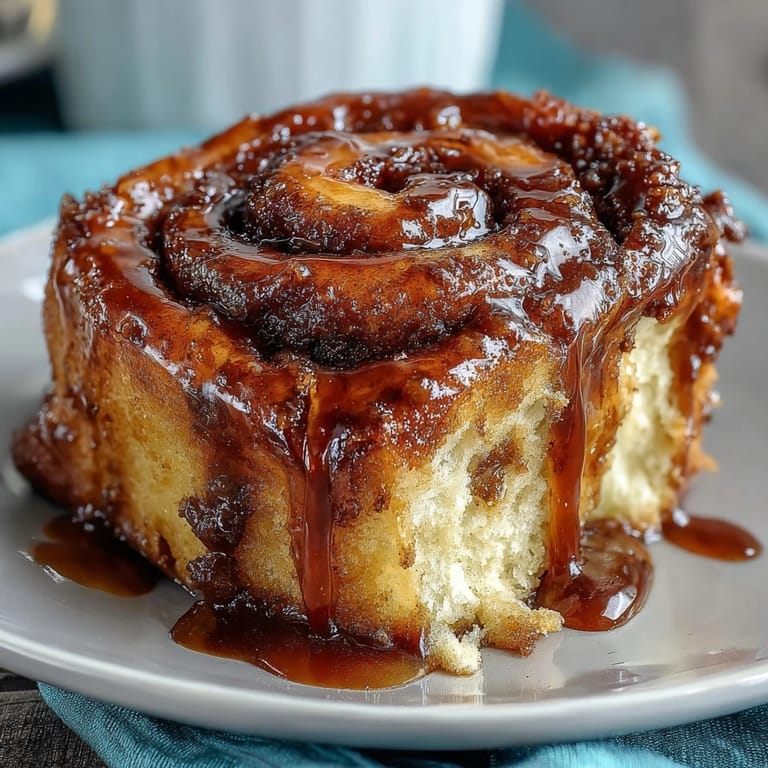
Save There's something magical about waking up to the smell of fresh orange rolls baking in the oven, especially when you did most of the work the night before. My neighbor brought over a batch of these one Sunday morning, and the aroma drifting through my kitchen was so intoxicating that I had to ask for the recipe before she even set them down. What I loved most wasn't just the fluffy, tender crumb infused with bright citrus zest, but the fact that she'd prepared everything the evening prior, making her morning effortless and her guests thoroughly impressed. Since then, these have become my go-to when I want to feel like I've done something fancy without the morning stress. The glaze alone—tangy and just sweet enough—ties everything together in a way that feels both indulgent and somehow still light.
I made these for my book club one Saturday, and honestly, they were ready and golden by the time everyone arrived—no last-minute scrambling in the kitchen. One friend who normally skips carbs at breakfast asked for a second roll, and another actually wanted to take the recipe home that very moment. That's when I realized these weren't just good rolls; they were the kind of thing people remember about your hospitality. The combination of the warm, pillowy texture and that zingy citrus glaze somehow made everyone linger a bit longer at the table, talking over their coffee. It felt less like serving breakfast and more like sharing something that mattered.
Ingredients
- All-purpose flour: At 3 1/2 cups, this is your structural foundation—it gives the rolls their tender crumb without being too dense, and there's really no need to swap it out for bread flour here.
- Instant dry yeast: One packet (2 1/4 teaspoons) is all you need; it works quietly through the long overnight rise, which actually develops better flavor than a quick rise ever could.
- Whole milk and eggs: These two ingredients are what make the dough so silky and rich—the eggs add structure while the milk keeps everything tender and slightly sweet.
- Fresh orange zest: This is non-negotiable; use at least 2 large oranges for the dough because that's where the real citrus character comes through, and don't use bottled zest.
- Unsalted butter: Use softened butter for the filling so it spreads evenly and actually adheres to the dough rather than sliding off as you roll.
- Orange juice for the glaze: Fresh-squeezed is ideal, but even store-bought gives you that authentic citrus brightness that powdered sugar alone would never achieve.
Tired of Takeout? 🥡
Get 10 meals you can make faster than delivery arrives. Seriously.
One email. No spam. Unsubscribe anytime.
Instructions
- Mix your dry foundation:
- Whisk together flour, sugar, yeast, and salt in a large bowl so the yeast gets distributed evenly and won't clump when you add the wet ingredients. This step takes just a minute but makes a real difference in how the dough rises.
- Combine the wet ingredients:
- In a separate bowl, warm the milk to about body temperature (no hotter, or you'll kill the yeast), then whisk in the melted butter, room-temperature eggs, and that vibrant orange zest. The warmth of the milk is what activates the yeast, so don't skip the temperature check.
- Bring it together:
- Pour the wet mixture into your dry ingredients and stir until a shaggy, sticky dough comes together—don't worry if it looks rough at this stage. You're just getting everything incorporated before the real work begins.
- Knead until silky:
- By hand or with a stand mixer fitted with the dough hook, knead for 7 to 8 minutes until the dough becomes smooth, elastic, and only slightly sticky to the touch. You'll feel it transform under your hands, becoming almost alive and springy.
- Let it rise:
- Place the dough in a greased bowl, cover loosely with plastic wrap, and let it sit in a warm spot (like an unlit oven or near a sunny window) for 1 to 2 hours until it's puffy and roughly doubled. You're building flavor and structure here, so don't rush this.
- Shape your rolls:
- Punch down the dough gently, then turn it out onto a lightly floured surface and roll it into a 10 by 16-inch rectangle—you want it thin enough to roll easily but thick enough to create layers. Spread softened butter evenly across, then sprinkle with the sugar and orange zest filling, making sure it reaches all the edges.
- Roll and slice:
- Starting from one of the longer edges, roll the dough up tightly into a log, then use a sharp knife (or even dental floss, which sounds strange but really works) to cut 12 even rolls. The tighter you roll, the prettier your spiral will be.
- Prepare for overnight rest:
- Arrange the rolls cut-side up in a greased 9 by 13-inch baking dish, cover tightly with plastic wrap, and refrigerate overnight (or up to 16 hours). The cold slows the yeast way down, which is exactly what you want for convenience and flavor development.
- Bring them to room temperature:
- In the morning, pull the rolls out and let them sit on the counter, still covered, for 45 to 60 minutes until they're puffy and almost doubled again. You'll see them rise visibly, which is a good sign they're ready to bake.
- Bake until golden:
- Preheat your oven to 350°F, then bake uncovered for 22 to 25 minutes until the rolls are deep golden brown on top and feel light when you lift the pan. The aroma alone will tell you they're done.
- Make and drizzle the glaze:
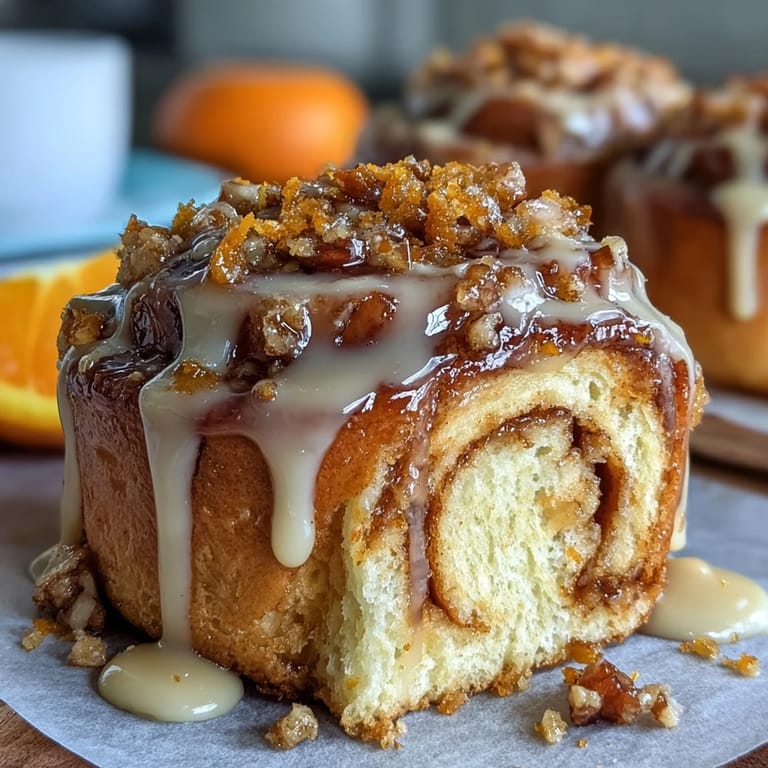
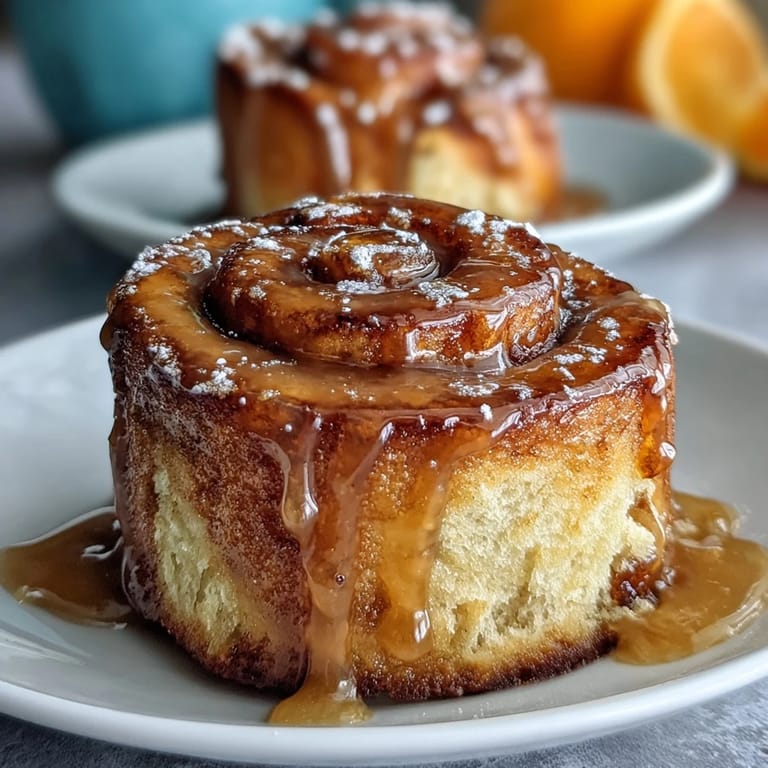
- While the rolls bake, whisk together powdered sugar, fresh orange juice (2 to 3 tablespoons), and a little orange zest until smooth and pourable. Drizzle this over the warm rolls the moment they come out of the oven so it soaks in slightly and creates that beautiful finish.
 Save
Save I'll never forget when my daughter asked if she could help make these the night before her school bake sale, and suddenly this recipe became about so much more than breakfast rolls. We zested oranges together, talked about why the dough felt alive in our hands, and she understood in that moment why bakers get excited about these things. The next morning, watching her carry those warm rolls into school with genuine pride made me realize that good recipes aren't just about feeding people—they're about inviting them into something that matters.
Why the Overnight Method Actually Works
There's a reason professional bakeries use overnight cold rises, and it has everything to do with flavor and texture. When yeast works slowly over many hours in a cold environment, it develops more complex flavors and the gluten network strengthens naturally, giving you a better crumb structure. You're essentially getting the benefits of a long fermentation without having to wake up at dawn to tend to your dough, which feels like cheating in the best possible way.
The Secret to Perfect Orange Flavor
Fresh zest is absolutely essential here—it's where the real orange essence lives, not in the juice alone. When you zest, use a microplane and only get the bright colored part of the peel, because the white pith underneath is bitter and will ruin the delicate balance. I learned this the hard way by over-zesting and creating rolls that tasted medicinal instead of bright and celebratory.
Troubleshooting and Variations
If your rolls seem to be rising too much during the overnight phase, you can always punch them down gently and let them rise again, or just bake them a few minutes longer. For a more sophisticated flavor, try adding a tiny pinch of cardamom to the filling, which brings out the floral notes in the orange without announcing itself. Substituting half the milk with fresh orange juice creates an even more intense citrus flavor, though it does make the dough slightly more delicate to handle.
- Always let eggs come to room temperature before mixing so they incorporate smoothly into the dough.
- If your kitchen is very cold, the overnight rise might take longer than expected, so just let them sit until they're visibly puffy.
- Leftover rolls can be wrapped and frozen for up to two weeks, then reheated gently in the oven.
 Save
Save These orange rolls have a way of making any morning feel special, whether you're feeding a crowd or just yourself with a good cup of coffee. Once you make them once, you'll understand why they deserve a permanent spot in your breakfast rotation.
Recipe FAQs
- → How long should the dough rise overnight?
The dough should be refrigerated overnight to develop flavor and texture. Allow it to rest at room temperature for 45–60 minutes before baking.
- → Can I use fresh orange juice in the dough?
Yes, substituting half the milk with fresh orange juice adds extra citrus richness to the rolls.
- → What is the best way to cut the rolls evenly?
Use a sharp knife or dental floss to cut the rolled dough into 12 even pieces for uniform baking.
- → How do I achieve a smooth orange glaze?
Whisk powdered sugar with fresh orange juice and zest until smooth to create a bright, tangy glaze.
- → Can I add any spices to the filling?
A pinch of cardamom in the filling enhances the flavor with a subtle spiced note that complements the orange zest.