 Save
Save The roux burned the first three times I attempted gumbo, filling my tiny apartment kitchen with smoke and disappointment. My neighbor Mrs. Landry, who'd grown up in Baton Rouge, finally took pity on me and demonstrated the patience required—standing over that pot, stirring without interruption, explaining that the difference between a ruined roux and a magnificent one is literally two minutes of watchful attention. Now I understand why gumbo is considered a labor of love, a dish that refuses to be rushed and rewards those who respect the process.
My first successful batch fed six people after a terrible day when everyone needed something warm and restorative. Watching my friends ladle steaming bowls over fluffy rice, the conversation gradually shifting from whatever had us down to animated storytelling about food and family—that's when gumbo became more than dinner to me.
Ingredients
- Andouille sausage: This smoked Cajun sausage is non-negotiable for authentic depth, but I've used chorizo in a pinch and nobody complained
- Boneless chicken thighs: Stay tender during long simmering unlike breasts which dry out, and they release gelatin that adds body to the broth
- Shrimp: Add them only in the last 10 minutes or they'll turn rubbery, a mistake I made exactly once before learning my lesson
- Onion, bell pepper, celery: Called the holy trinity for good reason, this aromatic foundation is what makes gumbo taste like gumbo
- Vegetable oil and flour: The roux requires equal parts fat and flour, though I measure by eye now rather than weighing
- Chicken or seafood stock: Homemade stock will elevate this dish, but quality store-bought works perfectly fine
- Bay leaves, thyme, smoked paprika: These dried herbs build layers of flavor that meld during the long simmer
- Cayenne and hot sauce: Adjust these to your heat tolerance, remembering that the flavors mellow as they cook
- Worcestershire sauce: Adds an umami punch that deepens the savory notes without being identifiable
- Filé powder: Ground sassafras leaves are optional but traditional, stirred in at the very end like my Louisiana neighbor taught me
Tired of Takeout? 🥡
Get 10 meals you can make faster than delivery arrives. Seriously.
One email. No spam. Unsubscribe anytime.
Instructions
- Mise en place everything:
- Chop all vegetables and measure spices before you start because once that roux begins cooking, you cannot step away.
- Make your roux:
- Heat oil in a heavy pot over medium heat, whisk in flour gradually, then stir constantly for 15 to 20 minutes until it reaches deep chocolate brown. The mixture should smell nutty and rich, not burned.
- Add the holy trinity:
- Stir in onion, bell pepper, and celery, cooking about 5 minutes until softened and fragrant.
- Bloom the garlic:
- Add minced garlic and stir for just 1 minute until aromatic, being careful not to let it brown.
- Brown your proteins:
- Add sausage and chicken chunks, sautéing 5 minutes until lightly colored on the outside.
- Build flavor:
- Stir in tomatoes, bay leaves, thyme, paprika, cayenne, salt, and black pepper until well distributed.
- Add the liquid:
- Pour in stock gradually while stirring to prevent lumps, bring to a boil, then reduce to low and simmer uncovered for 45 minutes, stirring occasionally.
- Add shrimp:
- Drop in shrimp during the last 10 minutes of simmering, cooking just until pink and opaque throughout.
- Season and finish:
- Stir in Worcestershire sauce and hot sauce, taste and adjust salt if needed, then remove from heat.
- Optional filé powder:
- If using, stir in ½ to 1 teaspoon filé powder off the heat to thicken slightly and add authentic flavor.
- Serve it up:
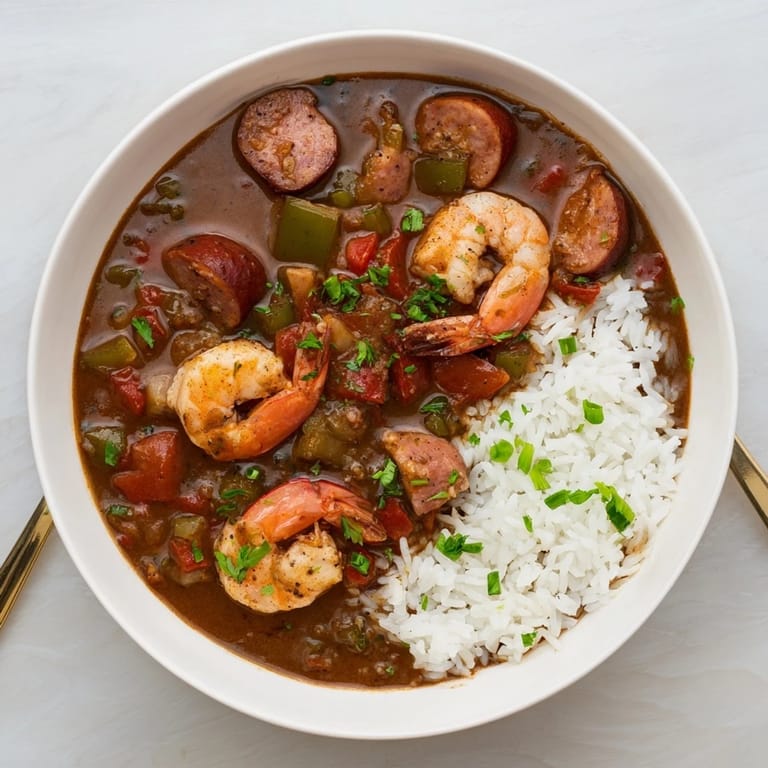
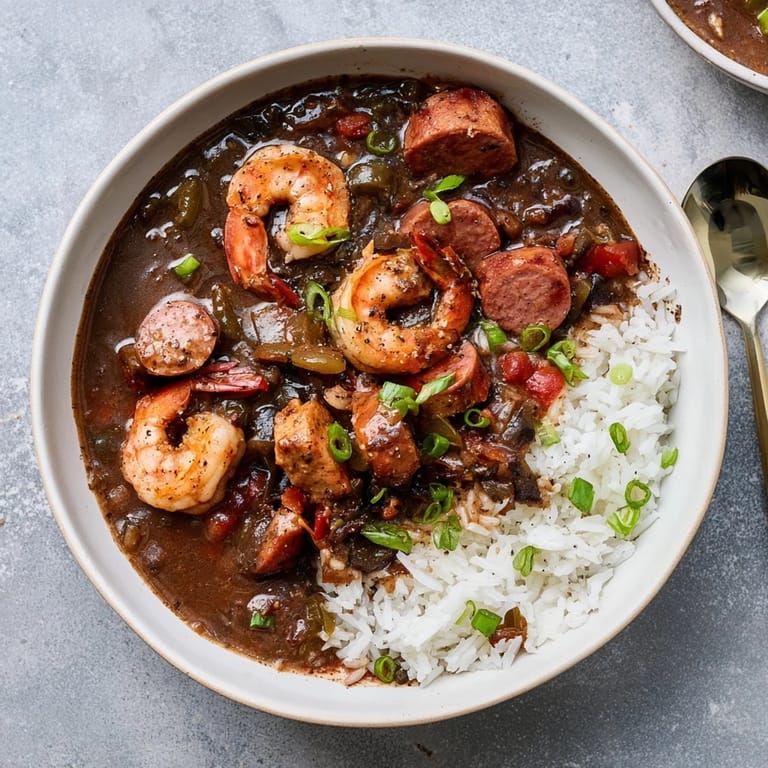
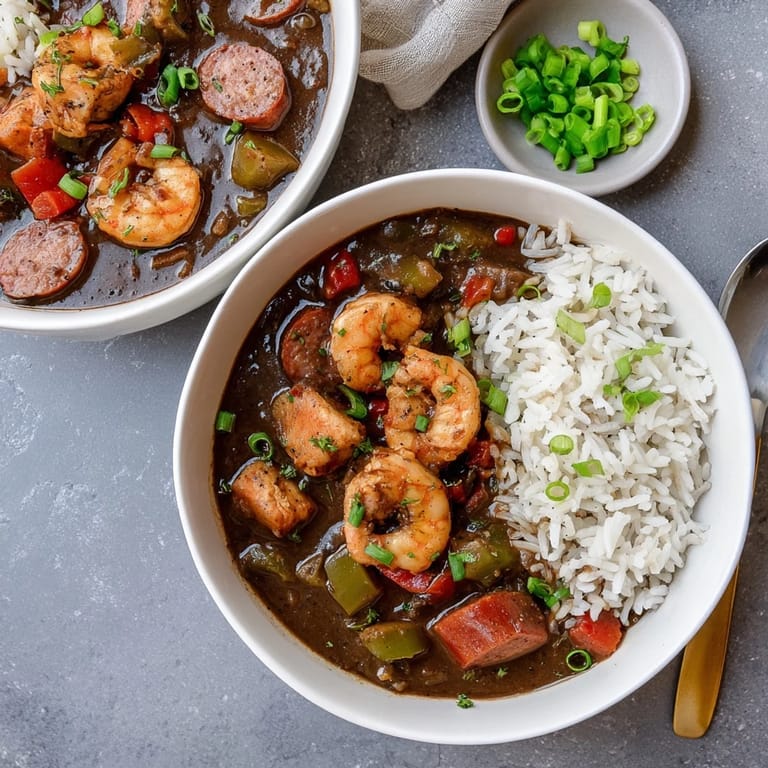
- Ladle hot gumbo over mounds of fluffy white rice and garnish with sliced scallions and fresh parsley.
 Save
Save This recipe became my go-to after my grandmother passed away, something about the long meditative process of stirring and tasting felt like cooking with her again in spirit.
The Art of the Perfect Roux
A good roux is the difference between okay gumbo and great gumbo. Take your time, lower the heat if needed, and remember that slightly underdone is better than slightly burned.
Rice Matters
Use long-grain white rice cooked until each grain is separate and fluffy. Sticky short-grain rice will turn your gumbo into a gluelike mash that no amount of delicious broth can save.
Make It Your Own
Traditional recipes are wonderful, but gumbo has always been about using what you have and feeding who you love. substitutions and adaptations have their place in this versatile dish.
- Crab meat adds sweetness and complexity if you can find fresh or good quality canned
- Okra can be sliced and added early in the cooking process as another natural thickener
- Collard greens stirred in during the last 15 minutes add nutrition and earthy flavor
 Save
Save Gumbo is more than a recipe, it's an invitation to slow down and feed people you love. That's the real secret ingredient.
Recipe FAQs
- → What makes the roux so important?
The roux creates the foundation, providing both thickening power and that signature deep, nutty flavor. Cooking it to a dark chocolate color takes patience but is essential for authentic taste and rich color.
- → Can I make this ahead of time?
Absolutely—the flavors actually deepen and improve after resting. Cool completely and refrigerate for up to 3 days, reheating gently. The roux may thicken further, so add a splash of stock or water when warming.
- → Is filé powder necessary?
Not strictly—filé powder adds distinct earthy flavor and acts as a thickener, but the roux already provides body. Add it at the end as a traditional touch, or skip it without compromising the dish.
- → How do I control the spice level?
Start with smaller amounts of cayenne and hot sauce, then adjust after simmering. The andouille also contributes heat, so taste near the end of cooking before adding more spice.
- → Can I use only seafood or only meat?
Yes—this adapts beautifully to seafood-only versions with crab, oysters, or fish, or meat-focused variations with just chicken and sausage. Adjust the stock accordingly to match your protein choice.