 Save
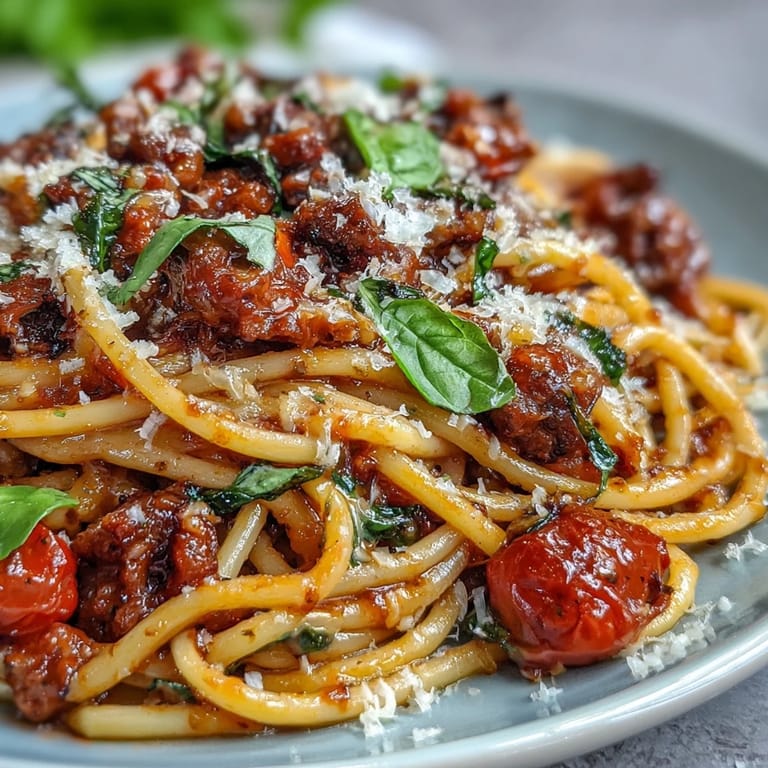
Save My kitchen smelled like a trattoria colliding with a street market in Bangkok the night I threw caution to the wind and dumped Chianti into a skillet already crackling with garlic and sausage. I had leftover wine from book club, a craving for something bold, and zero patience for following the rules. What emerged was this glorious tangle of noodles coated in a sauce that tasted like Italy took a joyride through Asia. It's been my go-to dinner party surprise ever since.
I made this for my brother's birthday last spring, and he ate two servings before he even asked what was in it. He's the pickiest eater I know, so watching him twirl those wine-stained noodles around his fork and reach for thirds felt like a small culinary victory. Now he texts me every few weeks asking if I'm making the drunk noodles again. It's become our thing.
Ingredients
- Spaghetti or linguine: Use any shape you love, but long noodles are best for catching all that glossy, wine-rich sauce.
- Extra-virgin olive oil: A fruity, quality oil adds depth right from the start and helps the garlic bloom without burning.
- Yellow onion: Slice it thin so it melts into the sauce and adds a subtle sweetness that balances the heat.
- Garlic cloves: Fresh is non-negotiable here; jarred garlic just won't give you that punchy, aromatic base.
- Red pepper flakes: Start conservatively and add more at the end if you want the heat to build gradually.
- Italian sausage or shrimp: Sausage brings richness and spice, while shrimp keeps things lighter and just as satisfying.
- Cherry tomatoes: They burst into jammy sweetness when cooked, creating pockets of bright flavor throughout the dish.
- Tomato paste: This concentrates the tomato flavor and helps the sauce cling to every strand of pasta.
- Dry red wine: Chianti or Sangiovese are ideal; their acidity and berry notes deglaze the pan and infuse the sauce with complexity.
- Soy sauce: It adds umami depth and a savory backbone that makes the whole dish hum.
- Worcestershire sauce: A few dashes bring tangy, fermented richness that ties everything together.
- Balsamic vinegar: Just a teaspoon brightens the sauce and cuts through the richness with a hint of sweetness.
- Fresh basil: Tear it roughly and stir it in at the end for a burst of herbal freshness that feels like summer.
- Fresh parsley: It adds a clean, grassy note that balances the bold wine and tomato flavors.
- Parmesan cheese: Grate it fresh for the best melt and nutty, salty finish.
Tired of Takeout? 🥡
Get 10 meals you can make faster than delivery arrives. Seriously.
One email. No spam. Unsubscribe anytime.
Instructions
- Boil the pasta:
- Bring a large pot of salted water to a rolling boil and cook your pasta until it's just al dente, with a slight bite in the center. Don't forget to scoop out a cup of that starchy pasta water before draining; it's liquid gold for building a silky sauce.
- Heat the skillet:
- While the pasta bubbles away, heat your largest skillet over medium-high heat and add the olive oil, swirling it around until it shimmers. This is your flavor foundation.
- Sauté the aromatics:
- Toss in the sliced onion and let it sizzle for a couple of minutes until it starts to soften and turn translucent. Add the garlic and red pepper flakes, stirring constantly for about 30 seconds until your kitchen smells incredible.
- Cook the protein:
- If you're using sausage, crumble it into the pan and cook for 5 to 7 minutes, breaking it into bite-sized pieces until it's browned and cooked through. For shrimp, cook them for 2 to 3 minutes per side until they turn pink and opaque, then set them aside briefly.
- Add the tomatoes:
- Stir in the halved cherry tomatoes and tomato paste, cooking for about 2 minutes while gently pressing some of the tomatoes with your spoon to release their sweet juices. The pan should start to look saucy and vibrant.
- Deglaze with wine:
- Pour in the red wine and use your spoon to scrape up all those delicious browned bits stuck to the bottom of the pan. Let it simmer for 2 to 3 minutes until the wine reduces by about half and the alcohol cooks off.
- Season the sauce:
- Stir in the soy sauce, Worcestershire sauce, and balsamic vinegar, then taste and adjust with salt, pepper, or more red pepper flakes. This is where the magic happens.
- Toss with pasta:
- Add the drained pasta directly to the skillet and toss everything together, adding reserved pasta water a few tablespoons at a time until the sauce clings to every noodle. The starch in the water helps emulsify the sauce into something glossy and luxurious.
- Finish with herbs and cheese:
- Remove the pan from the heat and stir in the torn basil, chopped parsley, and grated Parmesan until everything is evenly coated and the cheese has melted into the sauce. The residual heat will wilt the herbs just enough.
- Serve and garnish:
- Divide the pasta among bowls and top with extra basil, a sprinkle of Parmesan, sliced red chili if you're feeling brave, and a lemon wedge for a bright, citrusy finish.
 Save
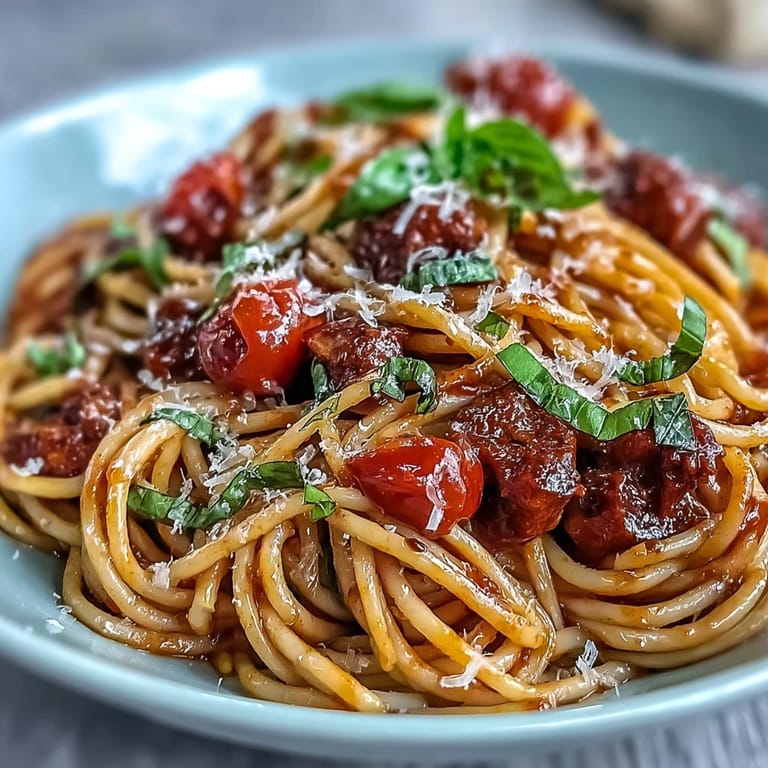
Save The first time I plated this dish for a dinner party, my friend leaned over the bowl, inhaled deeply, and said it smelled like vacation. She wasn't wrong. Between the wine, the basil, and the garlic, it transports you somewhere warm and a little reckless. That's the night it stopped being just dinner and became the dish I make when I want to feel like I'm treating myself, even on a Tuesday.
Swapping Proteins and Going Meatless
If you want to skip the meat, sautéed mushrooms work beautifully here; their earthy richness stands up to the wine and soy sauce without missing a beat. I've also used marinated tofu, pressed and cubed, which soaks up the sauce like a sponge. For a pescatarian spin, shrimp is the obvious choice, but scallops would be stunning too. Just sear them separately and nestle them on top at the end so they stay tender.
Choosing Your Wine
I always reach for a Chianti or Sangiovese because their bright acidity and red fruit notes mirror the tomatoes and balance the richness of the sausage. If you don't have Italian wine on hand, any dry red with good acidity will do; just avoid anything too oaky or sweet. And yes, you should drink the rest of the bottle with dinner. It's called research.
Storing and Reheating
Leftovers keep in an airtight container in the fridge for up to three days, and honestly, they taste even better the next day when the flavors have had time to get cozy. Reheat gently in a skillet over low heat with a splash of water, wine, or even a little olive oil to bring the sauce back to life. The pasta will have absorbed some of the liquid overnight, so don't be shy with that splash.
- If the sauce looks too thick after reheating, add a tablespoon of pasta water or wine and stir until it loosens.
- For meal prep, cook the sauce ahead and store it separately, then toss with freshly boiled pasta when you're ready to eat.
- Avoid microwaving if you can; stovetop reheating keeps the texture much better and prevents rubbery noodles.
 Save
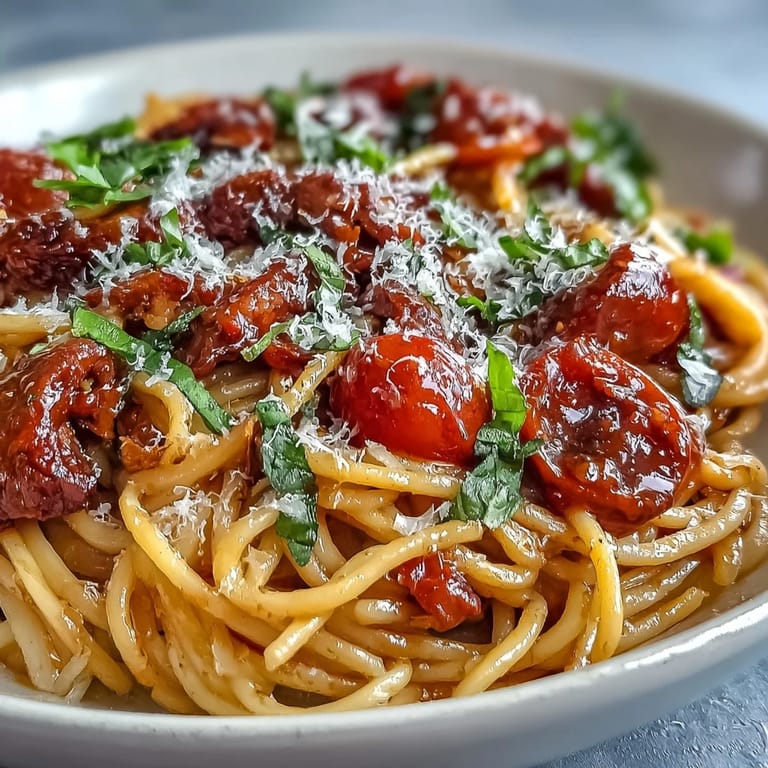
Save This dish has become my secret weapon for nights when I want to impress without the stress. It's messy, it's bold, and it tastes like you spent hours in the kitchen when really, you just opened a bottle of wine and let the stove do the work.
Recipe FAQs
- → Can I make this vegetarian?
Yes, simply omit the sausage or shrimp and use sautéed mushrooms or marinated tofu instead for a satisfying plant-based version.
- → What type of wine works best?
Dry red wines like Chianti or Sangiovese are recommended, but any dry red wine will work beautifully for deglazing and adding depth.
- → Can I use gluten-free pasta?
Absolutely, gluten-free spaghetti or linguine works perfectly. Just ensure your other ingredients like Worcestershire sauce are also gluten-free.
- → How spicy is this dish?
The spice level is adjustable with red pepper flakes. Use less for mild heat or add fresh chilies for extra kick to suit your preference.
- → How long do leftovers keep?
Store leftovers covered in the refrigerator for up to 3 days. Reheat gently with a splash of water or wine to refresh the sauce.
- → Can I freeze this dish?
While best enjoyed fresh, you can freeze leftovers for up to 2 months. Thaw overnight in the refrigerator and reheat with a little liquid.