 Save
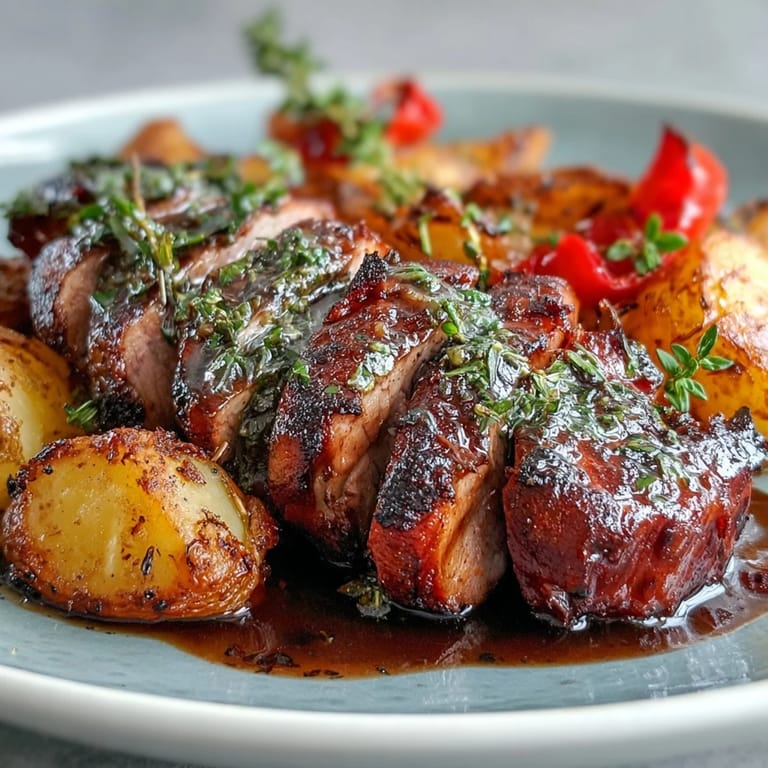
Save The smell of smoked paprika and rosemary hit me the moment I opened the fridge that morning, and I knew the pork had been doing its work all night. I'd bought the Ibérico fillet on a whim from a Spanish deli tucked between a laundromat and a bakery, mostly because the owner insisted I try it. That evening, as the potatoes turned golden and the peppers softened into sweet ribbons, I understood what he meant about meat that carries its own story. The kitchen filled with warmth and smoke, and I felt like I'd somehow transported a corner of Spain into my own home.
I made this for a small dinner party once, and my friend Sofia, who grew up in Seville, paused mid-bite and smiled in a way that told me I'd done something right. She said it reminded her of Sunday lunches at her grandmother's house, where the pork was always perfectly pink in the center and the potatoes were fought over. That night, we finished two bottles of Rioja and lingered at the table long after the plates were cleared. It became my go-to whenever I wanted to make an occasion feel special without spending all day in the kitchen.
Ingredients
- Ibérico pork fillet: This is the star, with marbling that keeps it juicy and a nutty richness you won't find in regular pork. If you can't find it, use pork tenderloin, but try to source good quality meat since it makes all the difference here.
- Extra virgin olive oil: Use a fruity, robust oil for the marinade; it carries the garlic and herbs into every fiber of the meat.
- Garlic: Fresh cloves, minced fine, bring sharpness and depth. Don't skimp or substitute powder, the real thing is essential.
- Fresh rosemary: Chopped finely so it clings to the pork, rosemary adds a piney, aromatic backbone that pairs beautifully with smoked paprika.
- Smoked paprika (pimentón): This is what gives the dish its Spanish soul. Look for the real stuff from Spain, it has a smoky sweetness that regular paprika can't match.
- Lemon zest and juice: Brightness and acidity cut through the richness and help tenderize the meat overnight.
- Sea salt and black pepper: Season generously; these simple touches bring everything into focus.
- Small new potatoes: Quartered so they crisp up on the edges and stay fluffy inside, they soak up all the flavors in the oven.
- Fresh thyme leaves: A whisper of earthiness that makes the potatoes taste like they've been roasting in a rustic Spanish kitchen.
- Red bell peppers: Cut into strips, they caramelize and sweeten as they roast, adding color and a gentle contrast to the savory pork.
Tired of Takeout? 🥡
Get 10 meals you can make faster than delivery arrives. Seriously.
One email. No spam. Unsubscribe anytime.
Instructions
- Marinate the Pork:
- Whisk together olive oil, minced garlic, chopped rosemary, smoked paprika, lemon zest, lemon juice, salt, and pepper in a bowl until it smells like a Spanish hillside. Rub the mixture all over the pork fillet, cover it tightly, and let it rest in the fridge overnight so the flavors sink deep into the meat.
- Prepare the Oven:
- Preheat your oven to 220°C (425°F) and let it get properly hot. This high heat is what gives the potatoes their crispy edges and helps the peppers caramelize beautifully.
- Roast the Potatoes:
- Toss the quartered potatoes with olive oil, salt, pepper, smoked paprika, and thyme leaves until every piece glistens. Spread them in a single layer on a baking tray and roast for 35 to 40 minutes, stirring halfway through, until they're golden and crisp on the outside.
- Roast the Red Peppers:
- On a separate tray, toss the pepper strips with olive oil, thinly sliced garlic, and a pinch of salt. Roast them for 20 to 25 minutes until they soften and their edges start to char and sweeten.
- Cook the Pork:
- Remove the pork from the marinade and pat it dry with paper towels so it sears properly. Heat a tablespoon of olive oil in an ovenproof skillet over medium-high heat, then sear the fillet for 2 to 3 minutes per side until it's beautifully browned, then transfer the whole skillet to the oven and roast for 12 to 15 minutes until the internal temperature reaches 63°C (145°F), and let it rest for 5 minutes before slicing.
- Serve:
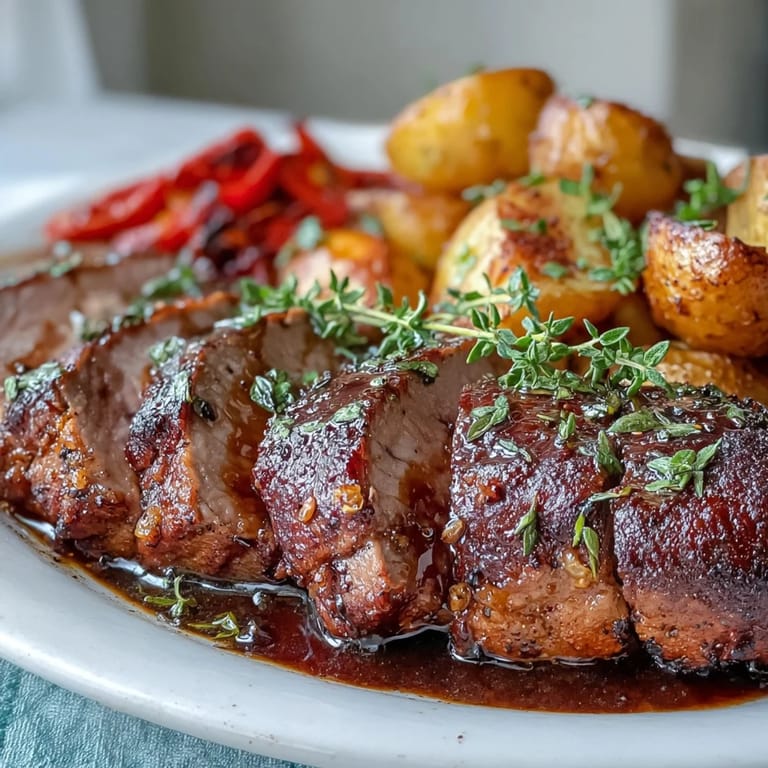
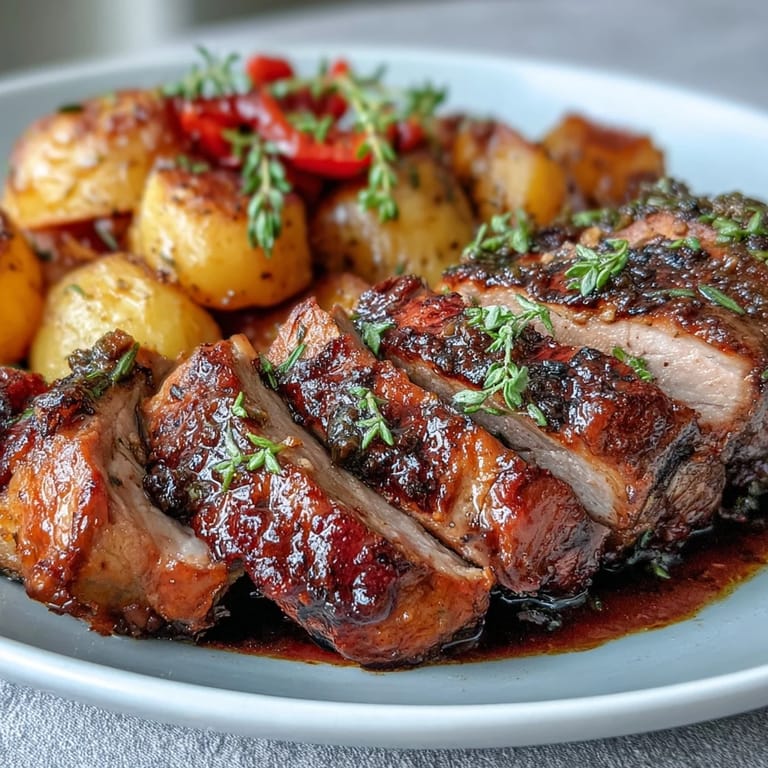
- Slice the pork into thick medallions and arrange them on plates alongside the crispy potatoes and sweet roasted peppers. Drizzle any pan juices over the top for extra richness and shine.
 Save
Save There's a moment when you pull the skillet out of the oven and the pork is bronzed and fragrant, and you realize this simple combination of meat, potatoes, and peppers has become something greater than its parts. I've served this to skeptics who claimed they didn't like pork, and watched them go quiet as they ate, then ask for seconds. It's the kind of dish that turns a regular Wednesday into something worth remembering.
Choosing Your Pork
Ibérico pork comes from a specific breed of pig raised in Spain, often on a diet of acorns, which gives the meat its unique nutty flavor and beautiful marbling. If you can find it, it's worth the splurge for a special meal, but don't stress if it's not available. A good quality pork tenderloin will still give you a tender, flavorful result as long as you don't overcook it. The marinade does a lot of the heavy lifting, so even standard pork will taste exceptional.
Making It Your Own
I've played with this recipe more times than I can count, and it's remarkably forgiving. Sometimes I add a handful of cherry tomatoes to the pepper tray for bursts of sweetness, or toss in some red onion wedges with the potatoes for extra caramelization. A drizzle of sherry vinegar over the finished dish adds a sharp, bright note that cuts through the richness beautifully. If you're feeling fancy, a sprinkle of toasted almonds or pine nuts on top brings a lovely crunch and a nod to Spanish tradition.
Serving and Pairing
This dish lands on the table looking like you've been cooking all day, but you and I both know the oven did most of the work. I like to serve it family-style on a big platter, with everyone reaching in and helping themselves. A simple green salad with a lemon vinaigrette on the side balances the richness, and crusty bread is perfect for mopping up any pan juices.
- Pour a Spanish Rioja or Tempranillo to echo the flavors of the paprika and rosemary.
- Leftovers, if you're lucky enough to have any, make an incredible sandwich the next day with a smear of aioli.
- If you're feeding a crowd, this recipe doubles easily, just use two trays and give everything a little extra space to crisp up.
 Save
Save This recipe has earned its place in my regular rotation because it delivers every single time without demanding perfection. I hope it brings as much warmth and flavor to your table as it has to mine.
Recipe FAQs
- → Can I use regular pork tenderloin instead of Ibérico?
Yes, regular pork tenderloin works well as a substitute. Monitor the cooking time carefully as it may cook slightly faster than Ibérico pork due to differences in marbling and fat content.
- → How long should I marinate the pork?
Marinate the pork overnight or for a minimum of 8 hours to allow the flavors to fully penetrate the meat. This overnight marination ensures maximum tenderness and flavor.
- → What internal temperature should the pork reach?
The pork should reach an internal temperature of 63°C (145°F) for perfectly cooked, slightly pink meat. Always let it rest for 5 minutes before slicing to retain juices.
- → Can I prepare the vegetables ahead of time?
Yes, you can cut and season the potatoes and peppers a few hours in advance. Store them covered in the refrigerator, then bring to room temperature before roasting for best results.
- → What wine pairs best with this dish?
A Spanish Rioja or Tempranillo complements the smoked paprika and rosemary beautifully. The wine's earthy notes enhance the rich flavors of the Ibérico pork and roasted vegetables.
- → How do I know when the potatoes are done?
The potatoes are ready when they're golden brown and crispy on the outside, tender inside. This typically takes 35-40 minutes at 220°C, with one stir halfway through roasting.