 Save
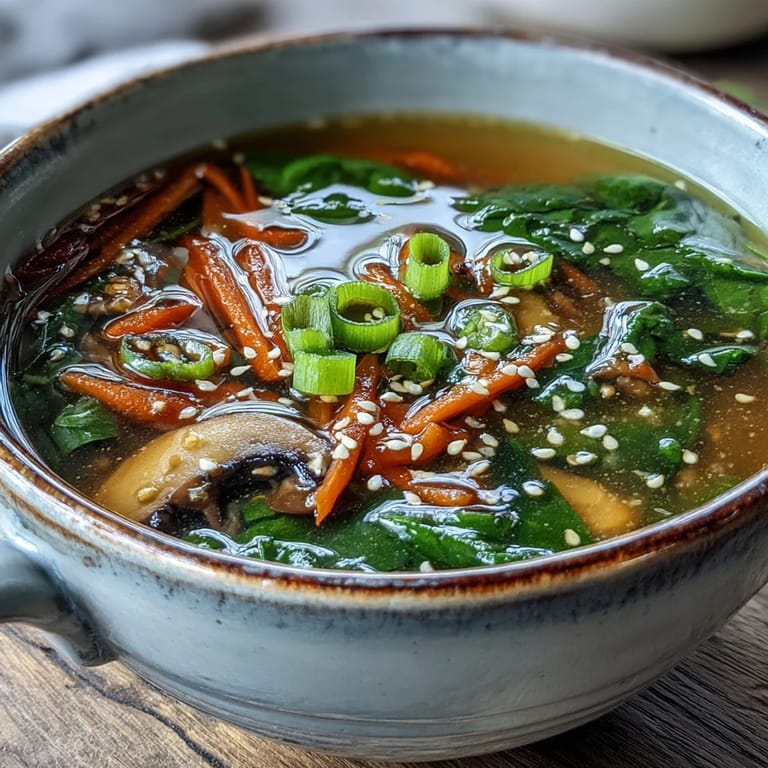
Save There's something about a steaming bowl of miso ginger soup that feels like a warm conversation with someone who actually listens. I discovered this particular combination on a grey Tuesday afternoon when my kitchen smelled like rain and I had a refrigerator full of vegetables that needed rescuing. The ginger hit first, then the miso unfolded its umami depths, and suddenly that ordinary soup became the reason I looked forward to lunch all week. It's the kind of dish that doesn't demand much from you but gives back everything.
I made this soup for my neighbor who had just moved in, and watching her close her eyes after the first spoonful told me everything. She came back the next week asking for the recipe, and now it's become our unofficial welcome-to-winter tradition. There's something about sharing a bowl of broth that breaks through the awkwardness of being new to a place.
Ingredients
- Vegetable broth (6 cups): Low-sodium is crucial here because the miso will add its own salt story, and you want to taste the vegetables, not drown in sodium.
- Fresh ginger (2-inch piece): Don't use powdered; the fresh ginger releases oils that powdered can never match, and you'll taste the difference immediately.
- Garlic (2 cloves): Thin slices dissolve into the broth rather than lurking as tough pieces, creating a subtle backdrop.
- White or yellow miso paste (2 tablespoons): This is where the probiotic magic lives, so stir it gently into cool broth first or the heat will kill what makes it special.
- Shiitake mushrooms (1 cup): Their earthiness deepens the soup in ways button mushrooms simply cannot, plus they hold their shape beautifully.
- Baby spinach or bok choy (1 cup): Spinach wilts into silken ribbons while bok choy keeps more structure; choose based on your mood.
- Carrot (1 medium): Julienned thin so it softens quickly and adds sweet contrast to the umami.
- Green onions (2): They're the final brightness that reminds your palate this is a living, fresh thing.
- Toasted sesame seeds (1 tablespoon): The toasting matters; it wakes them up and they crunch like tiny flavor fireworks.
- Fresh cilantro (optional): A small handful transforms the soup into something herbaceous and alive.
- Chili oil or red pepper flakes (optional): For those days when you need heat as much as comfort.
Tired of Takeout? 🥡
Get 10 meals you can make faster than delivery arrives. Seriously.
One email. No spam. Unsubscribe anytime.
Instructions
- Warm your stage:
- Pour the vegetable broth into a large saucepan and set the heat to medium, letting it come to a gentle simmer. You want to hear the quiet hiss, not an aggressive boil.
- Build the foundation:
- Add your ginger slices and garlic to the warm broth and let them steep for 10 minutes. The kitchen will smell like something from a dream you had once, and your patience here is rewarded with actual flavor depth.
- Introduce the vegetables:
- Slip in the mushrooms and carrots, giving them about 5 minutes to soften but still hold their shape. You're not looking for mushiness, just tenderness.
- The miso moment:
- This is where technique matters. Scoop out a ladleful of hot broth into a small bowl, then whisk your miso paste into it until completely smooth before stirring it back into the pot. This protects the probiotics from the shock of high heat.
- Gentle finishing touch:
- Lower the heat to low after the miso goes in, then add your spinach and green onions, stirring just until they soften into the broth. This takes about a minute, and you'll know it's done when the color changes.
- Taste and adjust:
- Before serving, give it a gentle taste. Sometimes it needs a touch more miso, sometimes a splash of soy sauce, sometimes it's already perfect.
- The grand finale:
- Ladle into bowls and scatter your sesame seeds across the top like confetti, then add cilantro and chili oil if you're feeling it. The garnish isn't decoration; it's the final chapter.
 Save
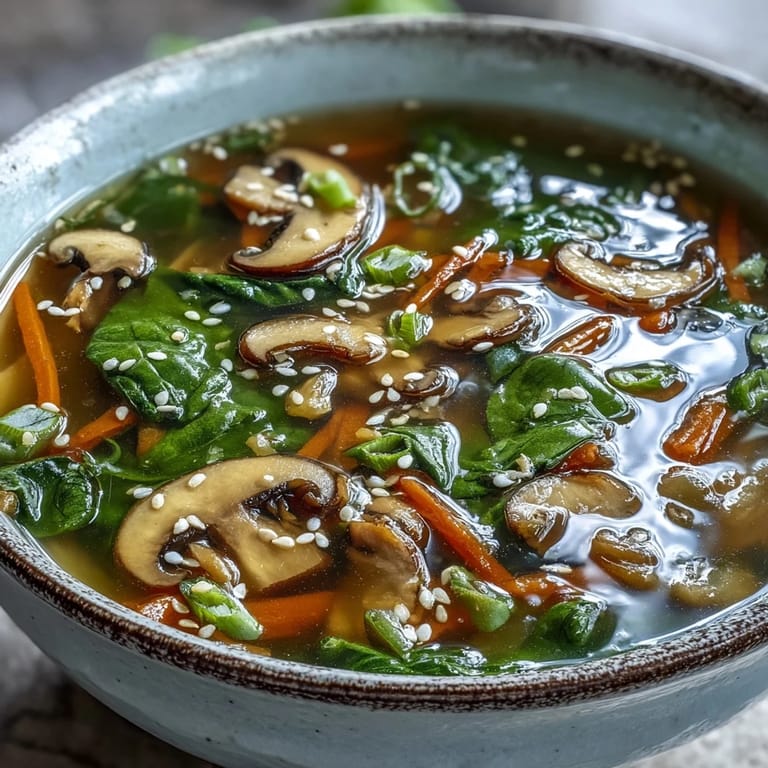
Save There's a moment in cooking when all the elements finally agree with each other, and this soup finds that moment every single time. It became my go-to when I needed to feed someone I cared about without making a production out of it.
When to Add Protein
If you want to make this more substantial, cubed silken tofu slips into the broth during the last minute, absorbing the flavors while keeping the soup light. I've also stirred in a handful of cooked soba noodles for winter nights when the soup needs to become dinner rather than just a side thought. Some people add a soft-boiled egg, and that transforms the whole thing into something almost creamy without adding any cream at all.
Flavor Variations Worth Trying
Red miso paste creates a deeper, more intense broth if you want something less delicate. White or yellow miso stays lighter and more approachable for people new to the flavor. I've experimented with adding a splash of rice vinegar at the end, which brightens everything, and a few thin slices of ginger added during the last minute create unexpected pockets of fresh heat throughout the bowl.
Storage and Make-Ahead Wisdom
This soup keeps beautifully in the refrigerator for three days, though I suggest making the miso paste addition right before serving rather than storing the whole pot together. The vegetables soften more as they sit, which some people love and others find less appealing. I've learned to store the broth separately from the miso mixture, then combine them on the stove just before eating, which keeps everything tasting fresh and alive.
- Add greens and green onions only after reheating, so they don't turn into sad soggy shadows.
- The toasted sesame seeds stay crunchier if you add them just as you're sitting down to eat.
- This freezes reasonably well if you leave out the miso and add it fresh after thawing, keeping those probiotics intact.
 Save
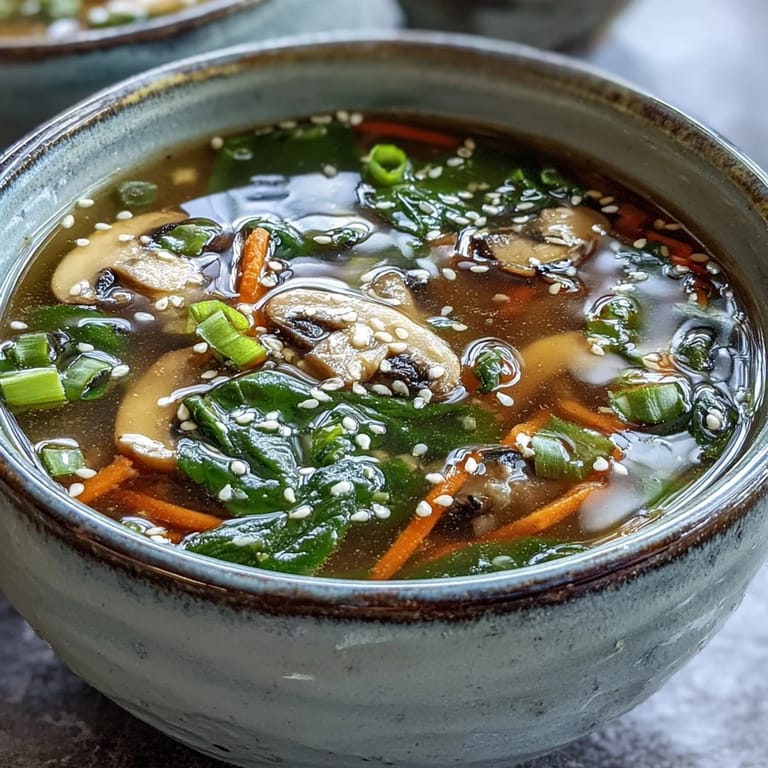
Save This soup taught me that the most comforting meals are often the simplest ones, built on technique rather than complexity. Return to this recipe on cold days and ordinary Tuesdays alike, and let it become part of your personal repertoire.
Recipe FAQs
- → Can I use different types of miso paste?
Yes, you can use white, yellow, or red miso. White and yellow miso are milder and sweeter, while red miso provides a deeper, more robust flavor. Choose based on your taste preference.
- → Why shouldn't I boil the soup after adding miso?
Boiling miso destroys the beneficial probiotics and can make the flavor bitter. Always add miso at the end on low heat to preserve its health benefits and delicate flavor.
- → What can I add to make this soup more filling?
Add cubed silken or firm tofu for extra protein, or include cooked soba or udon noodles for a heartier meal. You can also increase the variety of vegetables.
- → How do I store leftover soup?
Store in an airtight container in the refrigerator for up to 3 days. Reheat gently over low heat without boiling to preserve the miso's probiotic benefits.
- → Can I substitute the shiitake mushrooms?
Yes, you can use other mushroom varieties like cremini, oyster, or button mushrooms. Shiitakes provide an earthy, umami flavor, but any mushroom will work well in this soup.
- → Is this soup suitable for meal prep?
Absolutely! Prepare the broth and vegetables ahead of time, but add the miso and greens just before serving for the best flavor and texture. The base can be refrigerated for up to 4 days.