 Save
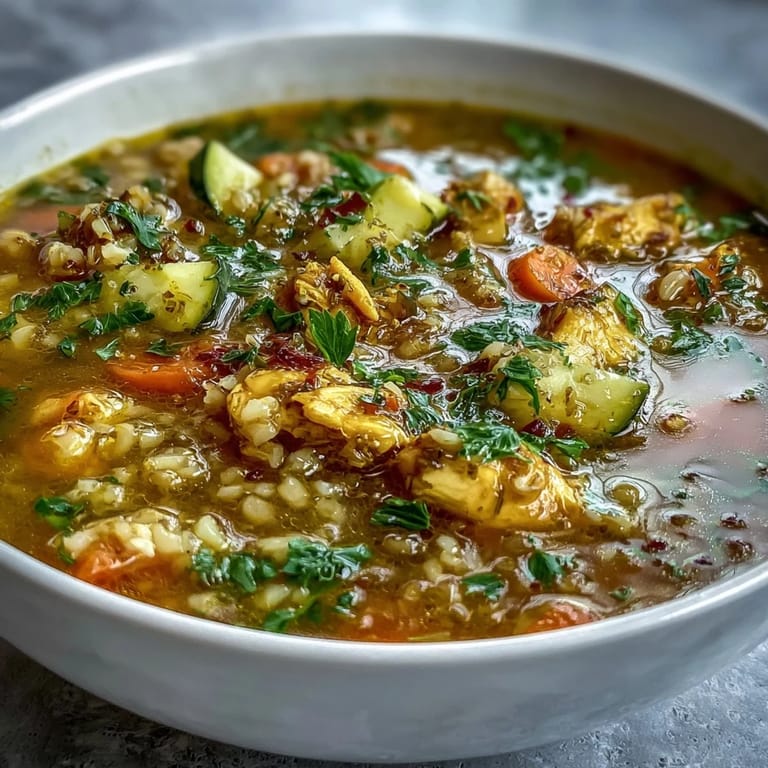
Save There's something about the color of turmeric that stopped me mid-chop one autumn afternoon—that warm, almost sunset-like golden glow spreading through my broth. My neighbor had mentioned turmeric's quieter benefits, and I found myself curious enough to build an entire soup around it. This bowl became my go-to on evenings when the house felt too quiet and my body needed something gentle but deeply satisfying.
I made this for my partner on a Thursday when he'd been staring at his laptop for too long, and watching him slow down around a bowl of this soup—really slow down, noticing each spoonful—reminded me why I cook at all. He asked for seconds, then a third bowl two days later. It became shorthand in our kitchen: golden soup equals I'm thinking about you.
Ingredients
- Boneless, skinless chicken breasts (400 g, diced): Dicing them small means they cook through quickly and almost dissolve into tenderness by the end.
- Pearl barley (3/4 cup, rinsed): Rinsing removes the starch and keeps your broth clear and refined instead of cloudy, which took me two attempts to learn.
- Carrots (2 medium, diced): Cut them smaller than you think you need to, they'll soften more evenly and add natural sweetness throughout.
- Celery stalks (2, diced): This is your umami whisper, the quiet depth that makes people ask what the secret ingredient is.
- Yellow onion (1 medium, finely chopped): Finely chopped means it'll break down completely and flavor the whole pot without leaving bits.
- Garlic cloves (3, minced): Mince it small and add it after the softer vegetables so it doesn't burn and turn bitter on you.
- Zucchini (1 small, diced): Add this near the end so it keeps a slight firmness and doesn't turn to mush.
- Low-sodium chicken broth (6 cups): Low-sodium lets you control the salt and taste how the turmeric actually sings.
- Ground turmeric (1 1/2 teaspoons): This is the star, so don't skip it or reduce it—it's what transforms this from regular soup into something medicinal and warm.
- Ground black pepper (1/2 teaspoon): Black pepper actually helps your body absorb the turmeric, so it's doing more than just seasoning.
- Sea salt (1 teaspoon, or to taste): Taste as you go and adjust at the very end when everything has mellowed together.
- Ground cumin (1/2 teaspoon): Cumin rounds out the turmeric and adds an earthy note that feels grounding.
- Dried thyme (1/2 teaspoon): A gentle herb that pairs beautifully with turmeric without overpowering it.
- Fresh parsley (2 tablespoons, chopped): Stir this in at the very end for brightness and a fresh finish.
- Lemon wedges: Squeeze them over each bowl just before eating to lift everything and add a little sparkle.
Tired of Takeout? 🥡
Get 10 meals you can make faster than delivery arrives. Seriously.
One email. No spam. Unsubscribe anytime.
Instructions
- Build your flavor base:
- Heat a tablespoon of olive oil in your pot over medium heat and add the onion, carrots, and celery. Let them soften for about 5 minutes, stirring now and then—you want them just starting to surrender, not soft yet. This foundation catches all the good flavors that follow.
- Wake up the spices:
- Stir in the minced garlic, turmeric, cumin, and thyme, cooking for just 1 minute until the whole kitchen smells like something warming and ancient. Don't let this go longer or the spices will scorch and taste bitter instead of golden.
- Sear the chicken gently:
- Add your diced chicken and stir it around for 2 to 3 minutes until the edges turn opaque and pale. You're not trying to cook it all the way through yet, just seal it so it stays tender.
- Bring it together:
- Pour in the broth, stir in the rinsed barley, salt, and black pepper. The soup will look simple and honest at this point, like it's not ready yet—it is, but trust the process.
- Simmer low and patient:
- Bring everything to a gentle boil, then turn the heat down and cover it. Let it bubble quietly for 35 minutes, stirring every so often to make sure the barley isn't sticking. The house will smell incredible.
- Add the last vegetable:
- Toss in your diced zucchini, cover again, and let it all cook together for another 10 to 15 minutes until the barley is tender and the chicken shreds easily with a spoon. The zucchini will soften but keep a slight resistance if you time it right.
- Taste and finish:
- Give the soup a taste, adjust the salt and turmeric if it needs it, then ladle it into bowls. Scatter fresh parsley over the top and serve with lemon wedges on the side so people can squeeze in as much brightness as they want.
 Save
Save One morning I reheated a portion and my coffee was still brewing when the smell hit me—that turmeric-and-thyme combination had deepened overnight, tasting even better than it had fresh. That's when I understood this soup doesn't just feed you in the moment; it keeps giving long after you've made it.
Why This Soup Becomes a Ritual
Somewhere between the third stir and watching the barley finally turn tender, this recipe stops being about following instructions and starts being about taking care. The repetition of tasting, adjusting, waiting—it becomes meditative in a way that feels almost selfish in the best sense. You're not rushing; you're deliberately slowing down.
Turmeric: The Golden Thread
Turmeric is one of those ingredients that tastes completely different depending on how you use it, and I learned this by accidentally adding too much once and having to pour half the pot down the drain. Now I respect it as the main character it is, not a background player. When you let it sit in hot broth with garlic and cumin, it transforms into something almost savory-sweet, like warmth you can taste.
Ways to Make It Your Own
This soup has flexibility built in, which is part of why it landed in my regular rotation—I can make it different depending on what's in my pantry or how I'm feeling that week. Sometimes I add a full handful of fresh spinach at the end, let it wilt right in the bowl. Other times I roast the carrots and celery first to bring out deeper sweetness before the broth goes in.
- For a vegetarian version, skip the chicken and add an extra half-cup of pearl barley or a tin of chickpeas for protein and heartiness.
- Fresh kale or spinach stirred in during the last minute adds green and minerals without changing the soup's essential personality.
- A squeeze of coconut milk at the end makes it richer and almost creamy, though it changes the whole mood—try it once to see if it's your version.
 Save
Save This soup taught me that comfort doesn't have to mean heavy, and that taking time with someone's meal is one of the most direct ways to say I see you. Serve it with crusty bread, a wedge of good cheese, and the kind of attention to the moment that makes eating alone feel like enough.
Recipe FAQs
- → Can I make this soup vegetarian?
Yes, simply omit the chicken and add an extra cup of pearl barley or a can of drained chickpeas for protein. Use vegetable broth instead of chicken broth.
- → How long does the pearl barley take to cook?
Pearl barley takes approximately 35-40 minutes to become tender when simmered in broth. The total cooking time for this soup is about 50 minutes.
- → Can I add extra vegetables to this dish?
Absolutely! Fresh spinach, kale, or other leafy greens can be stirred in during the last few minutes of cooking. You can also add extra carrots, celery, or root vegetables.
- → Will turmeric stain my cookware?
Turmeric can stain porous surfaces and light-colored utensils. Use stainless steel or dark-colored cookware and utensils to minimize staining concerns.
- → What can I serve with this soup?
This soup pairs beautifully with crusty bread, dinner rolls, or a simple side salad. For wine pairing, try a chilled Pinot Grigio or light-bodied Chardonnay.
- → How should I store leftovers?
Store cooled soup in an airtight container in the refrigerator for up to 4 days. The barley will continue to absorb liquid, so you may need to add extra broth when reheating.