 Save
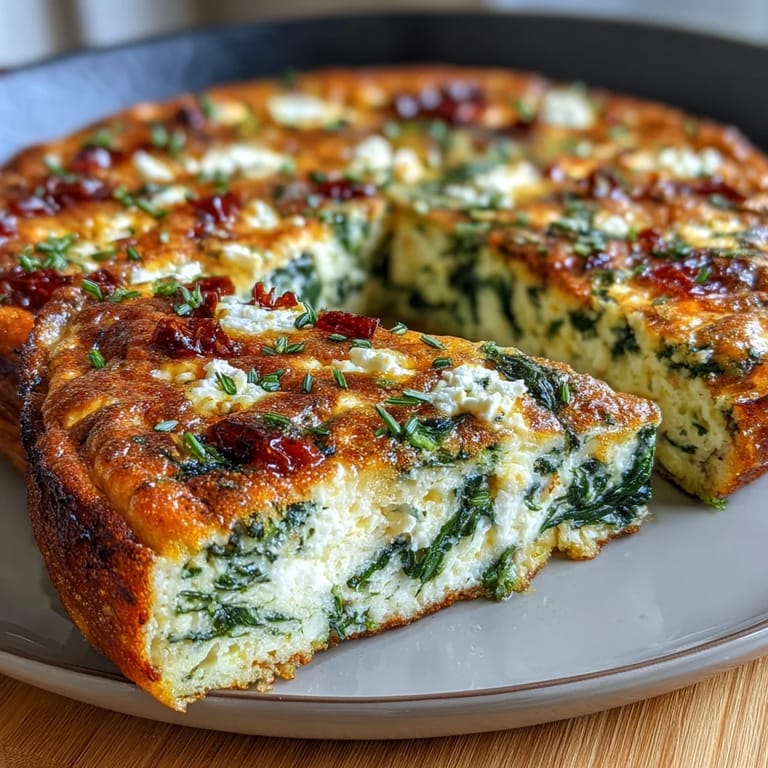
Save My kitchen filled with the smell of garlic and olive oil one lazy Sunday morning when I decided to stop buying expensive brunch at cafes and just make something myself. I'd grabbed a handful of spinach, some sun-dried tomatoes I'd been saving, and realized I had everything for a frittata right there in my fridge. Twenty minutes later, this golden, puffy thing emerged from the oven, and I understood why people get excited about eggs cooked this way. It became my answer to "what should we have for dinner?" on nights when I wanted something that felt fancy but required almost no fuss.
I made this for my neighbor one morning after she mentioned she'd been surviving on cereal before work, and watching her face light up when she took the first bite reminded me that the simplest meals sometimes hit hardest. She asked for the recipe immediately, and now she texts me photos of hers looking almost as good as mine. Food that's this easy shouldn't make people this happy, but somehow it does.
Ingredients
- Fresh baby spinach (2 cups): Rough chop it instead of leaving leaves whole so it distributes evenly and wilts down completely into the eggs.
- Sun-dried tomatoes (1/2 cup): These packed-in-oil ones are essential because they bring sweetness and chew that fresh tomatoes can't match in a frittata.
- Yellow onion (1 small): Dice it fine and cook it first to soften the bite and let the sweetness come through.
- Garlic (1 clove): Just one clove is enough because it gets concentrated and intense as the frittata bakes.
- Large eggs (6): Room temperature eggs blend more smoothly, so pull them out of the fridge a few minutes before cooking.
- Whole milk (1/4 cup): This keeps the frittata tender and creates that custardy texture that makes it feel special.
- Feta cheese (1/2 cup crumbled): The tang here balances all the sweet sun-dried tomato, so don't skip it or substitute it lightly.
- Parmesan cheese (1/4 cup grated): This adds nuttiness and helps the top turn golden when it hits the oven.
- Dried oregano (1/2 tsp): One shake of the bottle is all you need to whisper Mediterranean flavor through the whole thing.
- Freshly ground black pepper (1/4 tsp): Grind it yourself if you have a grinder, because pre-ground fades fast and won't taste as alive.
- Salt (1/4 tsp): Start with this amount and taste the egg mixture before pouring, since feta and Parmesan already bring salt.
- Olive oil (2 tbsp): Good olive oil matters here because you taste it, so use something you'd actually drizzle on bread.
Tired of Takeout? 🥡
Get 10 meals you can make faster than delivery arrives. Seriously.
One email. No spam. Unsubscribe anytime.
Instructions
- Heat your oven and pan:
- Set the oven to 375°F and let it preheat while you prep ingredients so you're not waiting around watching it warm up. If you have an ovenproof skillet, use that from the start so you don't have to transfer later.
- Build flavor with onion and garlic:
- Pour olive oil into your skillet over medium heat and add the chopped onion, letting it soften and turn translucent for about 3 or 4 minutes until you smell that sweet onion smell. Add the minced garlic and let it toast for just one more minute so it loses that sharp edge.
- Wilt the spinach and add color:
- Stir in your chopped spinach and watch it shrink down to almost nothing in about 2 minutes, then add the sun-dried tomatoes and cook everything together for another minute. The spinach should be fully tender, not just barely wilted.
- Mix your egg base:
- In a separate bowl, crack your eggs and whisk them with the milk, oregano, salt, and pepper until the mixture is light and uniform. Fold in the crumbled feta and grated Parmesan so the cheese is mixed through rather than sitting in clumps.
- Combine and start cooking:
- Pour the egg mixture slowly and evenly over your vegetables in the skillet, then give everything one gentle stir so the spinach, tomatoes, and onion get distributed throughout. Let it sit on the stovetop over medium heat for 2 or 3 minutes so the very bottom and edges begin to set before the oven takes over.
- Bake until golden and just set:
- Transfer the entire skillet to your preheated oven and bake for 10 to 12 minutes until the center looks barely set when you jiggle the pan slightly and the top turns a light golden brown. You want it just cooked through, not rubbery or overcooked.
- Rest and serve:
- Pull the skillet out, let it cool for a few minutes so the eggs finish cooking with residual heat, then slice it into wedges and serve warm or let it cool to room temperature. Both ways are absolutely delicious.
 Save
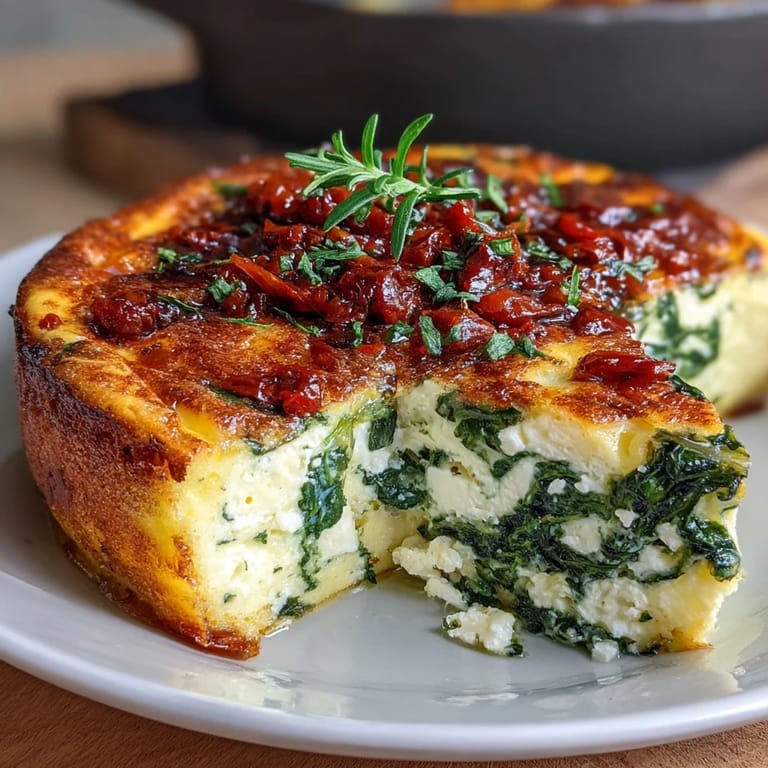
Save There's something about slicing into a frittata that's cooled slightly and watching the cheese still be a little melty while the eggs hold their shape that made me realize this is exactly the kind of food that deserves to be in regular rotation. My partner eats it for lunch three days after I make it, cold straight from the fridge, and says it tastes better than day-of, which I don't quite believe but I'm not arguing.
Why This Works as Both Brunch and Dinner
The beauty of a frittata is that it doesn't announce itself as breakfast or dinner depending on what time you serve it, and people seem to appreciate that flexibility. I've learned that brunch means it's fine to eat this at 11 a.m. with coffee and a pastry, but dinner means a simple salad on the side and maybe a glass of white wine, and somehow the same frittata makes sense in both contexts. It's one of those rare dishes that respects your schedule instead of forcing you into a category.
The Sun-Dried Tomato Secret
Fresh tomatoes would make this watery and dull, but sun-dried tomatoes bring concentrated flavor and a little chew that actually stands up inside the eggs. I used to skip them thinking they were fussy, until someone explained that they're just tomatoes with most of the water removed, so when they rehydrate slightly in the frittata they become tender little flavor bombs. Now I always have a jar in my pantry because they're the shortcut to making breakfast taste like you tried much harder than you actually did.
Make It Your Own
This formula is just a starting point, and I've made it with roasted red peppers, caramelized onions, fresh herbs, or whatever vegetables I wanted to use up from the fridge. The key is keeping the ratio of eggs to vegetables roughly the same, and not adding so much moisture that the frittata turns soupy and won't set properly. Some days I add a pinch of red pepper flakes if I want heat, or fresh dill if I'm feeling spring-like, and it always works.
- Swap spinach for arugula or kale if you want something with a different texture or flavor profile.
- Add crumbled sausage or chopped bacon if you want protein beyond the eggs, browning it first before you add the onions.
- Use a mix of cheeses like goat cheese or ricotta if feta feels too strong or you want a creamier texture.
 Save
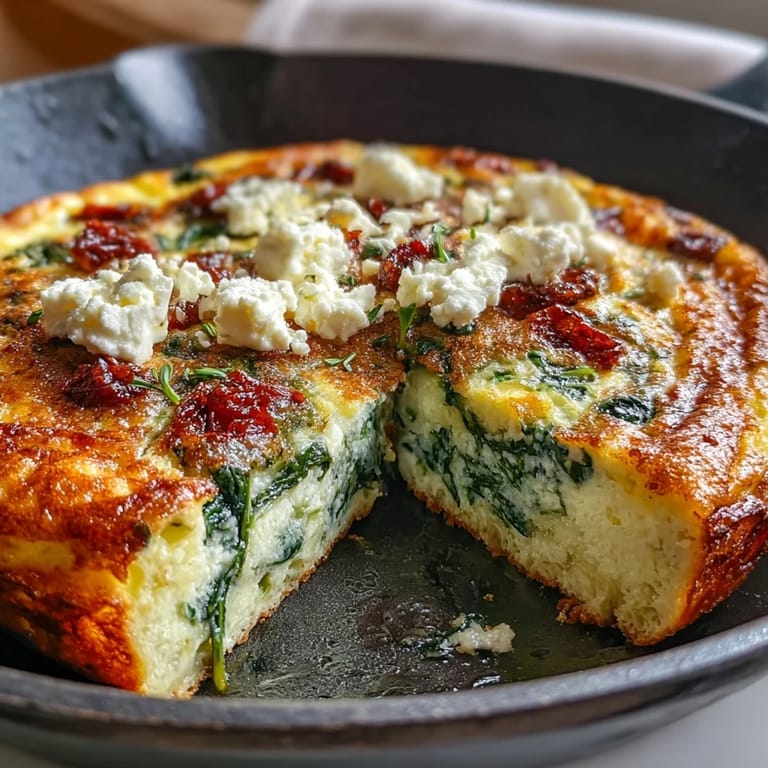
Save This frittata taught me that some of the best meals come from not trying too hard, and that Mediterranean flavors speak a language that never gets old. Make it once and it becomes the thing you turn to whenever you want something that tastes good, travels well, and makes you feel like you have your life together, which is maybe the best thing any recipe can do.
Recipe FAQs
- → Can I substitute frozen spinach?
Yes, thawed and well-drained frozen spinach works well without altering texture significantly.
- → What’s the best cheese alternative for dairy-free diets?
Use plant-based feta substitutes and omit Parmesan to maintain flavor and texture.
- → How can I tell when the frittata is done baking?
The center should be just set with a slightly golden top, firm but still moist.
- → What side dishes complement this dish?
Light green salads or crusty bread pair nicely, balancing the rich, savory flavors.
- → Is this suitable for gluten-free diets?
Yes, the dish is naturally gluten-free, but always verify cheese and tomato packaging labels.