 Save
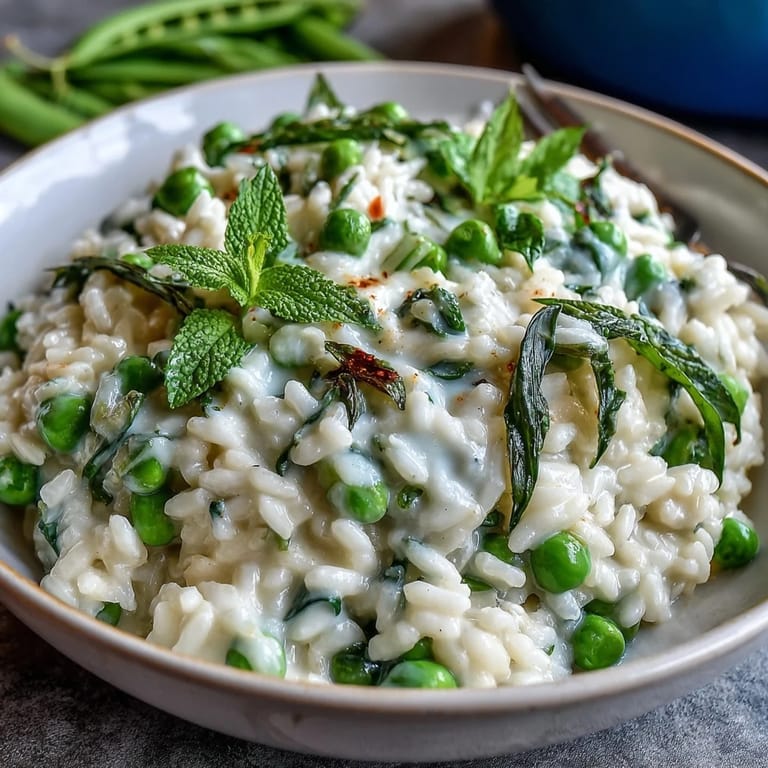
Save I made this risotto on a whim last April when my neighbor dropped off a basket of fresh peas from her garden, their pods still damp with morning dew. The moment I cracked one open and tasted that sweet, tender pea, I knew exactly what needed to happen that evening. My dinner guests hadn't even confirmed they were coming yet, but I was already mentally stirring cream into rice, imagining how that bright mint would cut through the richness. Sometimes the best meals start not with a plan, but with an ingredient that demands to be celebrated.
That April dinner party turned into one of those evenings where everyone lingered at the table talking until nearly midnight. One guest asked for the recipe halfway through her second bowl, and another kept sneaking extra Parmesan onto his plate when he thought nobody was looking. I realized that night that risotto isn't just food—it's an edible version of slowing down, of paying attention to each small addition, each gentle stir.
Ingredients
- Fresh or frozen green peas (1 cup): Fresh are magical if you can get them, but honestly, good quality frozen peas work beautifully and sometimes taste better because they're picked at peak ripeness.
- Small onion, finely chopped: This is your flavor foundation, so take a breath and chop it properly—no chunks, which means no surprises later.
- Garlic cloves, minced (2): Fresh garlic makes all the difference; the jarred stuff will taste like regret, so please spend thirty seconds mincing it by hand.
- Arborio rice (1 1/2 cups): The short, starchy grains are what make risotto creamy, so don't try to improvise with long-grain rice—it simply won't cooperate.
- Vegetable stock, kept warm (4 cups): Warm stock means the rice absorbs it properly instead of shocking the grains with temperature changes; keep a separate pot simmering nearby.
- Dry white wine (1/2 cup): Something you'd actually drink, not cooking wine—this adds acidity and brightness that can't be faked.
- Unsalted butter, divided (3 tablespoons): The first two tablespoons sauté your aromatics, the last tablespoon finishes the dish with silky richness.
- Freshly grated Parmesan cheese (1/2 cup plus extra): Block Parmesan grated by your own hand tastes infinitely better than pre-shredded, and it melts into the risotto like velvet instead of clumping.
- Fresh mint leaves, finely chopped (1/4 cup): This is the soul of the dish, so use it generously and add most of it at the end so it stays bright and fresh-tasting.
- Fresh flat-leaf parsley (2 tablespoons, optional): Adds a subtle earthiness that lets the mint shine without competing.
- Salt and freshly ground black pepper: Taste constantly as you cook, because you're the only one who knows how salty your stock is.
- Lemon zest (from 1 lemon): The zest alone transforms everything, so use a microplane and don't skip this step—it's your secret weapon.
Tired of Takeout? 🥡
Get 10 meals you can make faster than delivery arrives. Seriously.
One email. No spam. Unsubscribe anytime.
Instructions
- Start your aromatics:
- Melt two tablespoons of butter in a large saucepan over medium heat, then add your chopped onion. Cook gently for about four minutes, stirring occasionally, until it turns translucent and soft—you're coaxing out sweetness, not browning anything. Add your minced garlic and stir for another minute, and the kitchen will smell so good you might forget you haven't even started the actual risotto yet.
- Toast the rice:
- Pour in your Arborio rice and stir constantly for about two minutes, coating every grain in butter until it looks slightly translucent at the edges and smells toasty and alive. This step matters more than you might think because it helps the rice maintain its shape instead of turning into mush.
- Deglaze with wine:
- Pour in the white wine and stir steadily until almost all of it is absorbed, which takes about two minutes and fills your kitchen with a lovely, slightly boozy aroma. You're creating flavor, not rushing through a step.
- Add stock gradually and stir:
- This is where patience becomes your best friend. Add about one ladle of warm stock, stir gently and almost constantly, and wait until most of the liquid is absorbed before adding the next ladle—this usually takes about eighteen to twenty minutes total. Your constant stirring releases the starch from the rice, which is what makes risotto creamy, so don't phone this part in.
- Introduce the peas:
- During the last five minutes of cooking, stir in your peas and let them warm through gently. They'll stay bright green and tender instead of turning to soft mush if you don't add them too early.
- Finish with richness:
- Remove the pan from heat and stir in the remaining butter, grated Parmesan, chopped mint, parsley if using, and lemon zest all at once. Taste it, adjust salt and pepper, and stir until the whole thing looks creamy and cohesive.
- Serve immediately:
- Risotto waits for no one, so spoon it into bowls right away, top with extra Parmesan and a few fresh mint leaves, and watch people's faces light up.
 Save
Save There's something meditative about standing at the stove, ladle in hand, waiting for each addition of stock to absorb before moving forward. It forces you to slow down in a world that's always rushing, and that mindfulness somehow makes the finished dish taste better—like you've literally cooked your attention into it.
The Art of Constant Stirring
Some recipes tell you to stir occasionally, but risotto demands your presence and your wooden spoon in almost constant motion. This isn't a chore—it's actually the secret to creamy risotto, because you're gently releasing starch from the rice grains into the liquid, creating that signature silky texture that makes people close their eyes and smile. The stirring also ensures nothing sticks to the bottom of the pan, and it keeps you engaged with what you're making instead of wandering away to check your phone.
Why Fresh Mint Changes Everything
Dried mint tastes musty and flat by comparison, and it dissolves into the risotto rather than adding brightness. Fresh mint leaves, chopped just before they hit the pan, stay vibrant and bring a clean, almost champagne-like quality to each spoonful. I learned this the hard way by using dried once, and the result was a creamy dish that tasted like it was missing something I couldn't quite name—turns out it was missing joy.
Making It Your Own
This risotto is a canvas, and you're invited to paint on it. Some cooks add a splash of good olive oil at the end for extra luxury, while others garnish with crispy pancetta or roasted pine nuts for texture. The base recipe is sturdy enough to support your creativity while still holding its own identity.
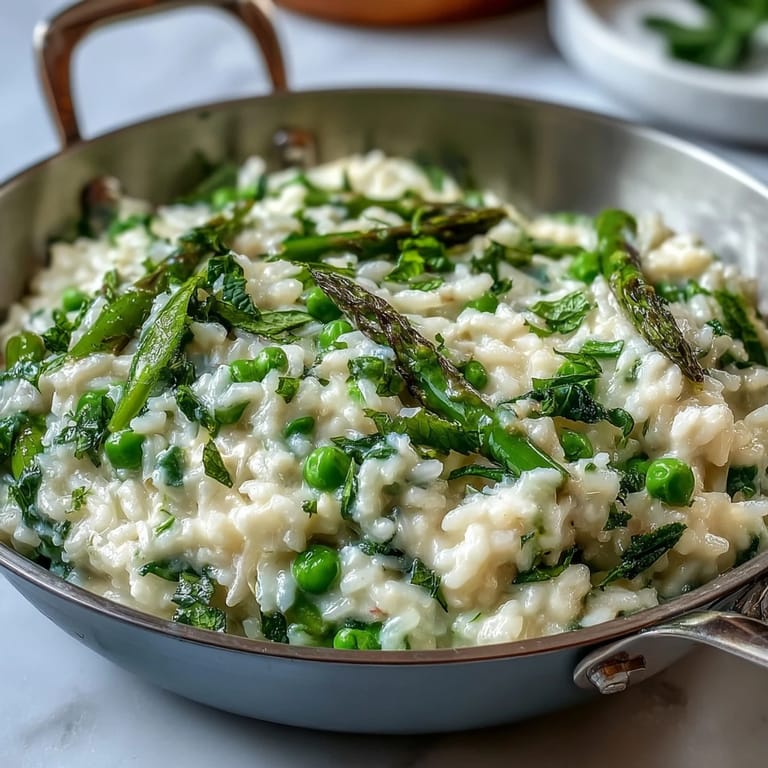
- If you want to add roasted asparagus or fresh corn, sauté them separately and fold them in at the end so they don't get lost in the creaminess.
- A whisper of saffron or fresh tarragon would transform this into something completely different but equally delicious.
- If you're serving this to someone who avoids dairy, you can use good olive oil instead of the final butter, though it won't be quite the same experience.
 Save
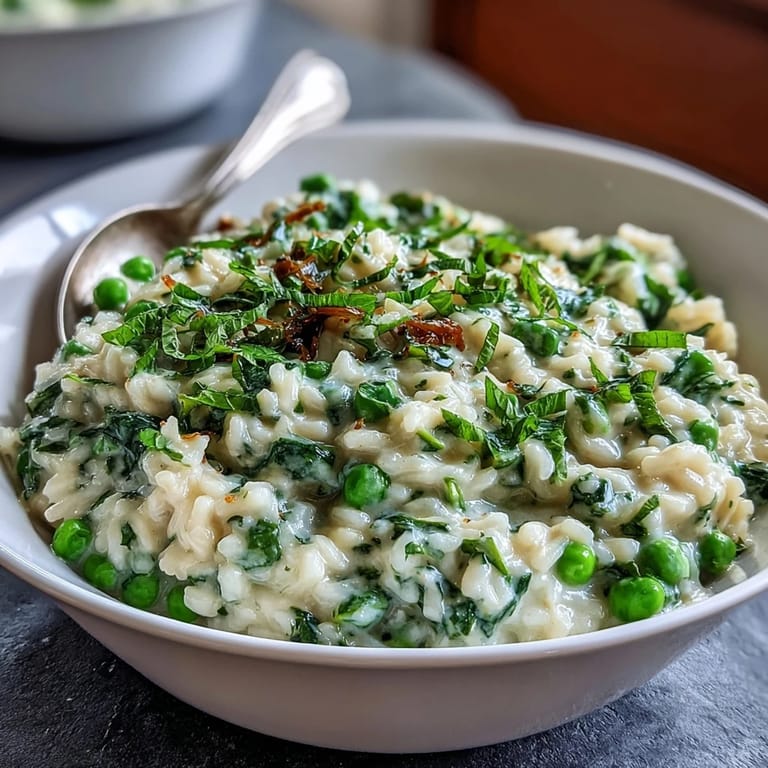
Save Every time I make this, I'm reminded that some of the best meals come from the simplest ingredients treated with genuine care. Serve this to people you love, and watch it become the dish they ask you to make again.
Recipe FAQs
- → Can I use frozen peas instead of fresh?
Yes, frozen peas are a great alternative and maintain their sweetness when stirred in during the final cooking minutes.
- → What type of rice is best for this dish?
Arborio rice is ideal because its high starch content creates the creamy texture characteristic of this dish.
- → How do I know when the risotto is done?
The risotto is ready when the rice is al dente—tender but with a slight bite—and the mixture is creamy and smooth.
- → Can I prepare this in advance?
Risotto is best served immediately to enjoy its creamy consistency, but you can prepare the base ahead and finish just before serving.
- → What wine pairs well with this dish?
A crisp white wine such as Sauvignon Blanc or Pinot Grigio complements the fresh flavors and richness perfectly.
- → Is it possible to make this dish vegan?
You can substitute butter with plant-based margarine and omit Parmesan or use a vegan cheese alternative.