 Save
Save The smell hit me the moment I opened the door: something deep and earthy simmering on the stove, a faint sweetness threading through it. My neighbor had been braising venison all afternoon and invited me over with a wooden spoon still in her hand. She poured a little sloe gin into the pot while I watched, and the kitchen filled with a scent I still chase every winter. That evening, I scribbled down everything she told me, and this stew has been my cold-weather anchor ever since.
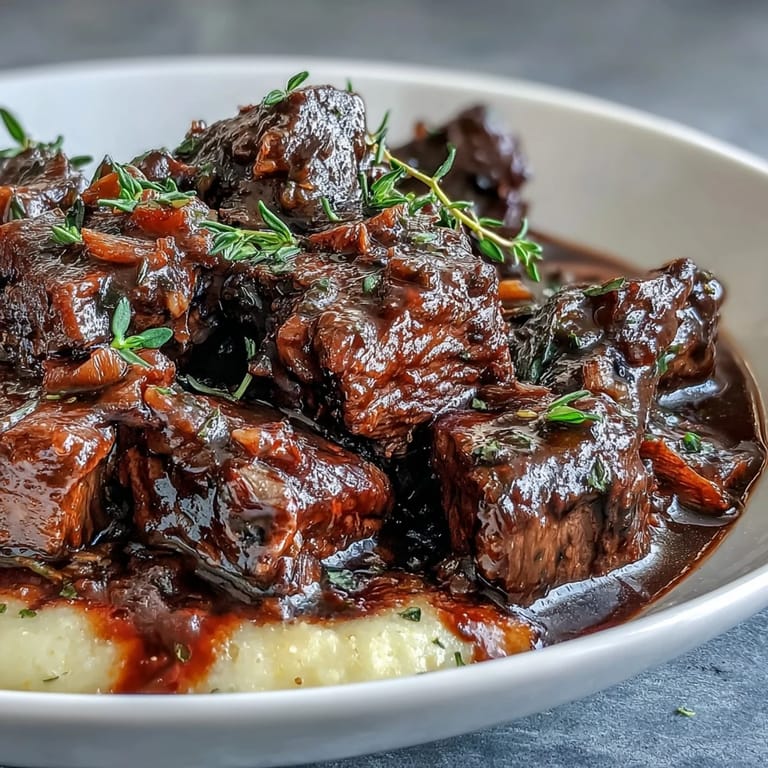
I made this for a small dinner party on a rainy February night, and everyone went quiet after the first bite. One friend, who usually talks through entire meals, just nodded and reached for seconds. The polenta soaked up the rich, glossy sauce, and the juniper berries left this subtle, piney note that made the whole thing feel like a forest cabin meal. Nobody left until the pot was empty.
Ingredients
- 800 g venison shoulder or stewing venison, cut into 3 cm cubes: Venison can be lean and tough if rushed, but slow braising turns it meltingly tender with a deep, gamey richness that beef just cant match.
- 2 tbsp olive oil: Use enough to get a good sear on the meat without it steaming, that caramelized crust is where the flavor starts.
- 1 large onion, finely chopped: Onions break down into the sauce and add a natural sweetness that balances the sloe gins tartness.
- 2 carrots, sliced: They soften into the stew and lend a gentle earthiness, plus they soak up all that gorgeous liquid.
- 2 celery stalks, diced: Celery adds a subtle vegetal backbone that keeps the stew from feeling too heavy.
- 2 garlic cloves, minced: Fresh garlic brings a warm, aromatic punch, stir it in just before the tomato paste so it doesnt burn.
- 2 tbsp tomato paste: This deepens the color and adds a concentrated umami layer that makes everything taste richer.
- 150 ml sloe gin: The star ingredient, it brings a fruity, slightly bitter sweetness that plays beautifully with the venison.
- 400 ml beef or game stock: Use the best stock you can find, it forms the base of the sauce and carries all the other flavors.
- 1 tbsp redcurrant jelly: A spoonful of this adds a glossy finish and a hint of tartness that brightens the whole pot.
- 2 bay leaves: They lend a subtle herbal note that unfolds slowly as the stew simmers.
- 2 sprigs fresh thyme: Thyme and venison are old friends, the leaves release their fragrance into the sauce as it cooks.
- 1 tsp juniper berries, lightly crushed: These add a piney, gin-like note that ties the whole dish together.
- Salt and freshly ground black pepper, to taste: Season generously, venison needs it to really shine.
- 750 ml whole milk: Milk makes the polenta creamy and rich, water alone leaves it flat.
- 250 ml water: This thins the polenta just enough so it doesnt turn into a brick.
- 150 g polenta: Quick-cooking polenta is fine for weeknights, but regular polenta has a deeper corn flavor if you have the time.
- 40 g unsalted butter: Stir this in at the end for a silky, luxurious finish.
- 50 g grated Parmesan cheese: Parmesan adds a salty, nutty depth that makes the polenta taste complete.
Tired of Takeout? 🥡
Get 10 meals you can make faster than delivery arrives. Seriously.
One email. No spam. Unsubscribe anytime.
Instructions
- Sear the venison:
- Heat the olive oil in a large, heavy-based casserole over medium-high heat until it shimmers. Brown the venison cubes in batches without crowding the pan, letting each piece develop a deep, caramelized crust before setting aside.
- Build the base:
- Add the onion, carrots, and celery to the same pan, scraping up any browned bits stuck to the bottom. Cook for 5 to 7 minutes until softened, then stir in the garlic and tomato paste, cooking for another minute until fragrant.
- Deglaze with sloe gin:
- Return the venison to the pan and pour in the sloe gin, letting it bubble and reduce for 2 minutes. The alcohol will cook off, leaving behind a fruity, concentrated sweetness.
- Add the braising liquid:
- Stir in the stock, redcurrant jelly, bay leaves, thyme, and juniper berries. Season generously with salt and pepper, then bring everything to a gentle simmer.
- Braise low and slow:
- Cover the pot and cook over low heat for 2 hours, stirring occasionally. The venison should be fork-tender and the sauce thickened and glossy.
- Start the polenta:
- While the stew is cooking, heat the milk and water in a saucepan until just simmering. Gradually whisk in the polenta in a steady stream to avoid lumps.
- Cook the polenta:
- Stir constantly over low heat for 5 to 10 minutes, or according to packet instructions, until the polenta is thick and creamy. Your arm will get a workout, but its worth it.
- Finish the polenta:
- Stir in the butter and Parmesan, then season to taste with salt. The polenta should be smooth and luxurious, not stiff or grainy.
- Serve:
- Remove the bay leaves and thyme sprigs from the stew. Ladle the venison and sauce over a generous mound of creamy polenta and serve hot.
 Save
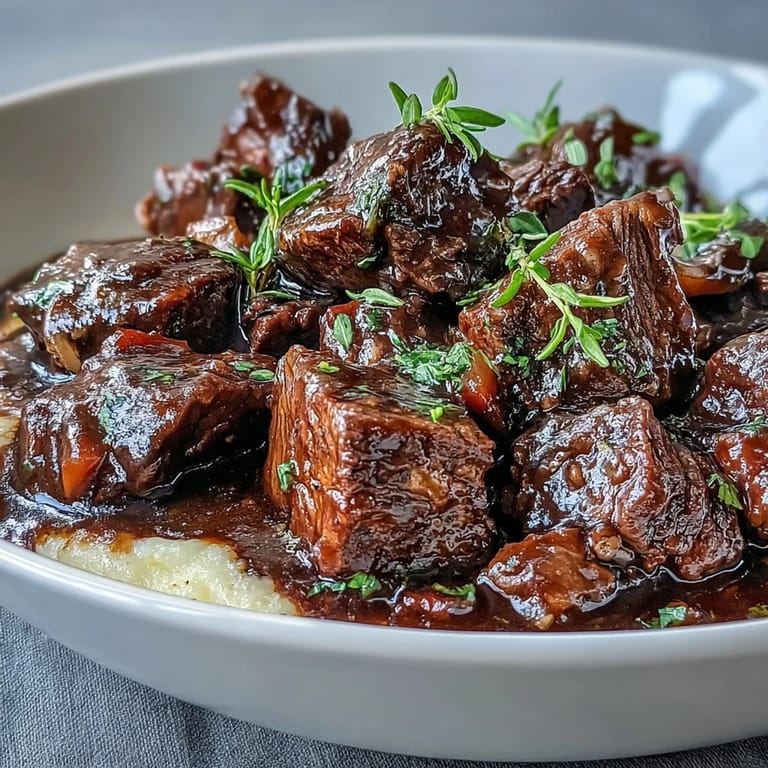
Save I served this to my father-in-law, who grew up hunting and is impossibly picky about game. He ate two bowls without saying much, then asked for the recipe on his way out. That quiet nod of approval meant more than any compliment ever could. This stew has a way of earning respect from the people who know their way around wild meat.
Choosing Your Venison
Shoulder or stewing cuts are ideal because they have enough fat and connective tissue to stay moist during the long braise. Avoid lean cuts like loin, they will dry out and turn tough. If you can find wild venison, it has a deeper, more complex flavor than farmed, though farmed is milder and more predictable. Ask your butcher to cube it for you if you are short on time, but make sure the pieces are roughly the same size so they cook evenly.
Making It Your Own
If you cannot find sloe gin, a good-quality port or berry liqueur works beautifully, though the flavor will be a bit sweeter. Some people add a splash of red wine alongside the sloe gin for extra depth, and I have done that when I had an open bottle lying around. You can also throw in a handful of dried cranberries or prunes during the last hour of cooking for little bursts of sweetness. The stew is forgiving, so do not be afraid to adjust it to what you have on hand.
Storing and Reheating
This stew keeps beautifully in the fridge for up to three days and freezes well for up to three months. The flavors deepen as it sits, so leftovers are a gift to your future self. Reheat gently on the stove with a splash of stock or water if it has thickened too much. Polenta is best made fresh, but you can make it ahead, spread it in a dish to set, then slice and pan-fry it in butter for a different texture.
- Let the stew cool completely before refrigerating to avoid condensation in the container.
- Freeze in individual portions so you can defrost only what you need.
- Garnish with fresh parsley or thyme just before serving for a pop of color and freshness.
 Save
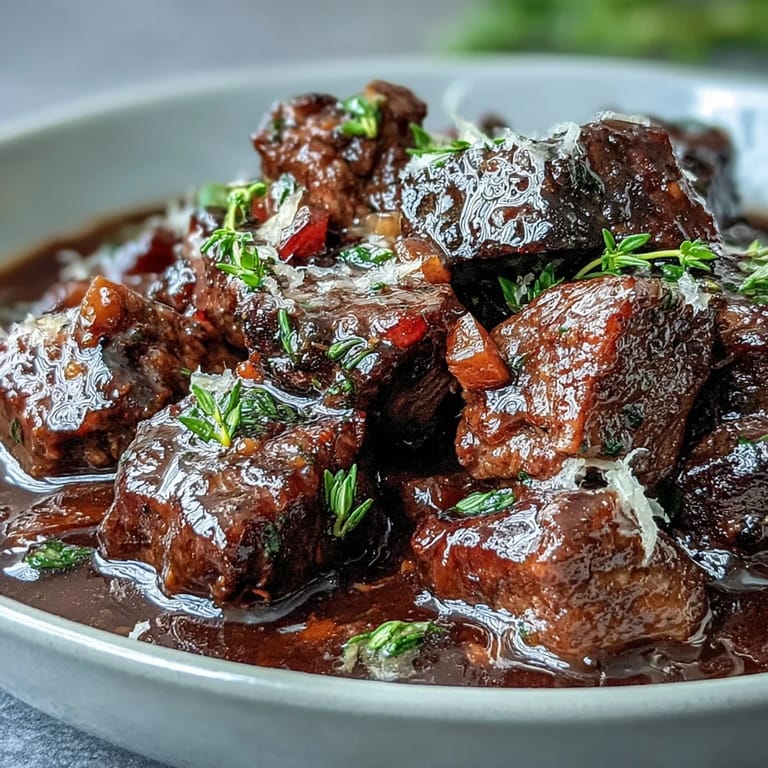
Save This is the kind of meal that makes winter feel less like something to endure and more like an excuse to gather around the table. I hope it fills your kitchen with the same warmth it brings to mine.
Recipe FAQs
- → Can I substitute the venison with another meat?
Yes, beef chuck or lamb shoulder work well as alternatives. Use the same cooking time and method for tender results.
- → What can I use instead of sloe gin?
Port, berry liqueur, or a combination of red wine with a tablespoon of blackberry jam make excellent substitutes for sloe gin.
- → Can I make this stew ahead of time?
Absolutely. The stew tastes even better the next day as flavors develop. Refrigerate up to 3 days or freeze for up to 3 months. Reheat gently before serving.
- → How do I know when the venison is tender enough?
The venison should be fork-tender and easily pull apart after 2 hours of slow cooking. If still firm, continue cooking in 15-minute intervals.
- → Can I use instant polenta?
Yes, instant or quick-cooking polenta works perfectly and reduces cooking time to about 5 minutes. Follow the package instructions for best results.
- → What wine pairs best with this dish?
A robust red wine like Shiraz, Cabernet Sauvignon, or Malbec complements the rich venison and sloe gin flavors beautifully.