 Save
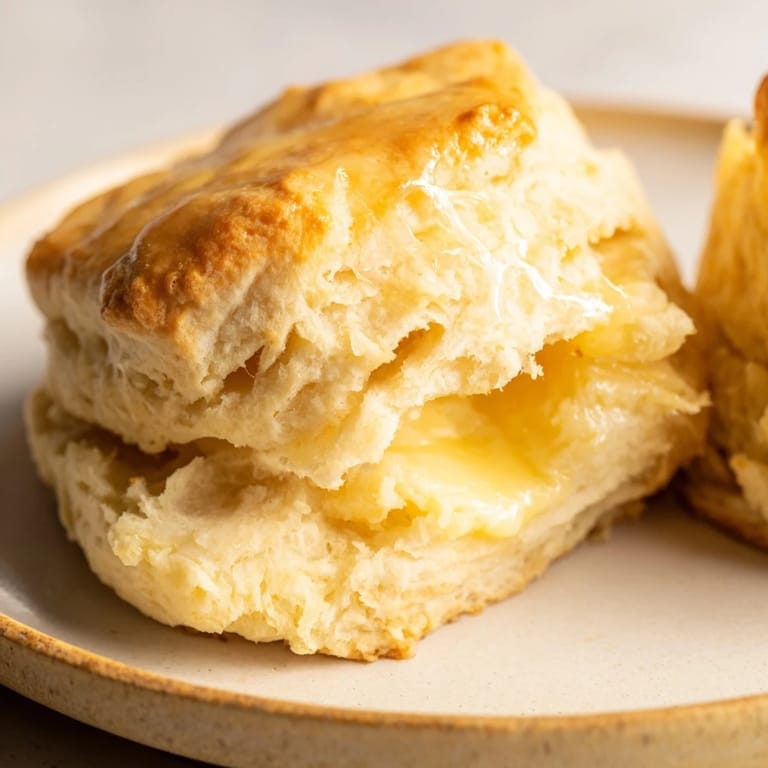
Save The Saturday morning I finally cracked the biscuit code, my tiny kitchen smelled like a southern bakery. I had failed so many times with tough, flat discs that I almost gave up. But this time, I kept every ingredient ice cold and worked the dough like my grandmother said, with a light touch and no overthinking. When those golden towers rose in the oven, I actually did a little happy dance right there by the stove.
Last Thanksgiving, I brought three dozen of these to my sisters house. Her father-in-law, who claims to be a biscuit connoisseur, took one bite and literally stopped the conversation to ask who made them. Watching everyone slather them with butter and strawberry jam while the turkey rested was the best compliment I could have asked for. Now they are requested for every family gathering.
Ingredients
- All-purpose flour: The protein structure here is crucial for lift, so avoid bread flour which makes them too chewy
- Baking powder and baking soda: This double-acting duo ensures maximum rise and that tender interior we all want
- Fine sea salt: Coarser salt can leave salty pockets, and salt is what balances the sweetness
- Granulated sugar: Just enough to enhance the natural flavors and help with golden browning
- Cold unsalted butter: Keeping it rock solid is the secret to flaky layers, and frozen butter works even better
- Ice cold buttermilk: The acidity activates the baking soda and creates the most tender crumb imaginable
Tired of Takeout? 🥡
Get 10 meals you can make faster than delivery arrives. Seriously.
One email. No spam. Unsubscribe anytime.
Instructions
- Heat things up:
- Preheat your oven to 220°C (425°F) and line a baking sheet with parchment paper for easy cleanup.
- Mix your dry ingredients:
- In a large bowl, whisk together the flour, baking powder, baking soda, salt, and sugar until thoroughly combined.
- Cut in the butter:
- Add those cold, cubed butter pieces and work quickly with a pastry cutter or your clean fingertips until the mixture looks like coarse crumbs with some pea-sized butter chunks still visible.
- Add the buttermilk:
- Make a well in the center, pour in the cold buttermilk, and stir gently with a fork until the dough just comes together.
- Create the layers:
- Turn the dough onto a lightly floured surface, pat it into a rectangle, and fold it in half like a letter before patting it out again and repeating the fold two more times.
- Shape and cut:
- Pat the dough to 2.5 cm (1 inch) thickness and cut straight down with a 6 cm (2½ inch) cutter, avoiding any twisting motion that would seal the edges.
- Prepare for baking:
- Place the biscuits close together on your prepared baking sheet and brush the tops lightly with extra buttermilk.
- Bake until golden:
- Bake for 13–15 minutes until the biscuits are towering and beautifully golden brown on top.
- Service time:
- Let them cool for just a few minutes before serving them warm with plenty of butter.
 Save
Save My friend Sarah called me at 7 AM on a Tuesday, panicked because she had promised homemade biscuits for her daughters classroom. I walked her through the steps over the phone while she made them in her pajamas. She texted later that they turned out better than the ones she had been ordering from a bakery for years. Sometimes the simplest recipes become the most meaningful.
Getting That Restaurant Rise
The difference between home and restaurant biscuits often comes down to oven temperature. That initial blast of high heat creates steam quickly, puffing the biscuits upward before the butter melts. I invested in an oven thermometer and discovered my oven ran 25 degrees cooler than the dial said. That tiny fix completely transformed my biscuit game forever.
The Folding Technique
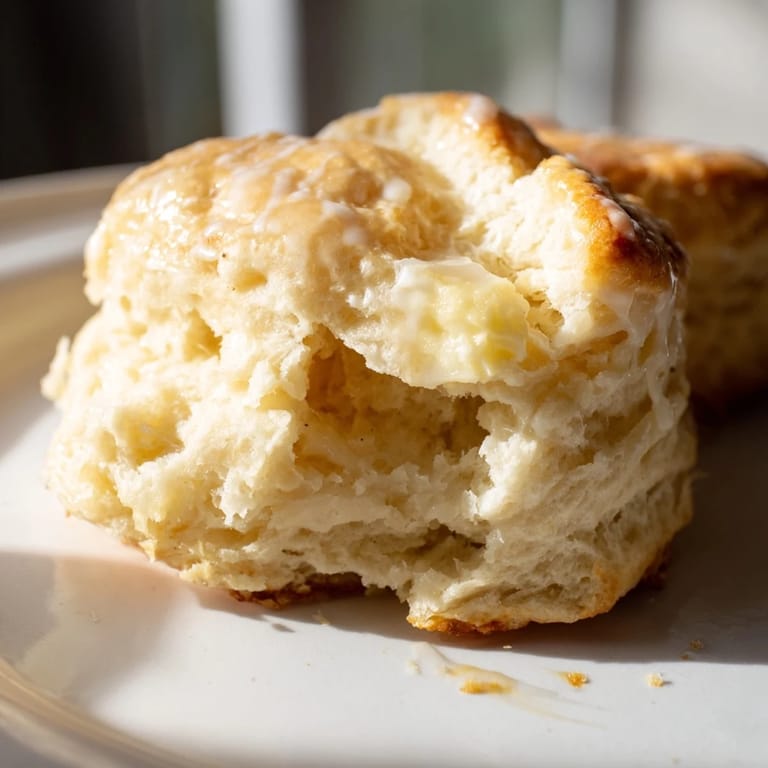
Those three simple folds create microscopic layers of butter between thin sheets of flour. When the butter melts in the oven, the steam puffs each layer separately, resulting in those gorgeous flaky pockets that pull apart so beautifully. I used to skip this step when I was in a rush, but now I treat it as sacred biscuit time that cannot be rushed.
Make Ahead Magic
You can cut the biscuits, freeze them on a baking sheet, then transfer to a freezer bag for up to three weeks. Bake them straight from frozen, adding just a few extra minutes to the time.
- Leftover biscuits freeze beautifully wrapped individually
- Reheat day-old biscuits in a 150°C oven for 5 minutes to refresh them
- Split and toast slightly stale biscuits under the broiler
 Save
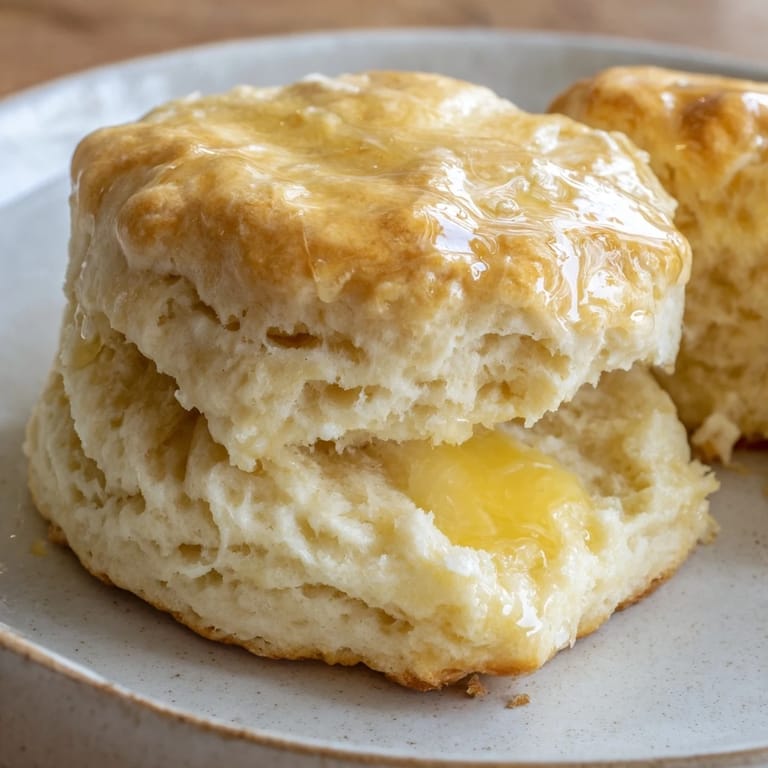
Save There is something profoundly satisfying about pulling a tray of towering biscuits from the oven. Here is to many mornings filled with flour-dusted counters and buttery perfection.
Recipe FAQs
- → Why do my biscuits turn out flat instead of tall?
Flat biscuits usually result from warm butter or overworking the dough. Keep your butter ice-cold until the moment it hits the flour, and handle the dough as little as possible. The cold butter creates steam pockets during baking that cause the biscuits to rise dramatically.
- → Can I substitute regular milk for buttermilk?
Yes—mix ¾ cup milk with 2 teaspoons lemon juice or vinegar and let it sit for 5 minutes. The acid activates the baking soda for proper lift, though genuine buttermilk yields the most tender crumb and tangy flavor.
- → Why shouldn't I twist the cutter when cutting biscuits?
Twisting seals the edges shut, preventing the biscuits from rising properly. Press straight down firmly and lift straight up. This keeps the cut edges open so they can expand upward in the oven, creating those characteristic tall sides.
- → How do I get extra flaky layers?
The folding method in this recipe creates additional layers. After mixing, pat the dough into a rectangle, fold it in half, and pat out again. Repeat this process 2-3 times total. Each fold creates more distinct layers that separate beautifully during baking.
- → Can I freeze the dough or baked biscuits?
Both freeze exceptionally well. Cut raw biscuits and freeze individually on a parchment-lined sheet before transferring to a bag. Bake from frozen, adding 2-3 minutes. Baked biscuits freeze for up to 3 months—reheat at 350°F for 5-8 minutes to refresh.
- → What's the purpose of brushing with buttermilk before baking?
The buttermilk wash promotes even browning and creates a beautifully golden, slightly glossy top. It also adds a subtle tangy flavor to the crust. For deeper color, you can brush with egg wash instead.